Reality, explained
An interactive walkthrough · 26 stages · tap the arrows, swipe, or use ← → · press / to search · your place is saved automatically
Normally we picture the universe as a giant box of stuff, with you as a tiny speck inside it. This walkthrough flips that picture around — one small step at a time. Here's the whole trip before you take it:
- You never touch the world directly. Everything you've ever known reached you through your own experience — sights, sounds, feelings in your head.
- So the one thing we can be sure is real is awareness itself — a claim that proves itself, since doubting it is itself an experience. "Solid matter out there" is actually the part we're inferring. (Stage 4 unpacks what kind of claim this is — and why everything beyond it is the genuinely hard part.)
- Underneath both, physics is exploring whether something simpler sits: information — pure differences and relationships, before any "thing" exists. (A live research frontier, not settled — Stage 6.)
- On this reading, what we call the physical world is what that information looks like once it's drawn into space, time, and particles — a bit like a video game only rendering the room you actually walk into.
- The weirdest stuff in physics — a photon's possibilities collapsing to one dot, entanglement and the spins that power it, "empty" space that's secretly full, where your mass really comes from (mostly field energy, not the Higgs — Stage 13), gravitational waves rippling spacetime, dark matter, dark energy, black holes, even time — looks far less paradoxical if separateness and solidity belong to the picture, not to what's really underneath. (Some of these — dark matter, dark energy — stay genuinely open: the frame reframes them, it doesn't solve them.) The same physics is what makes quantum computers work.
Every stage sorts its claims into honest buckets: already proven, being tested right now, and still just an idea. No mysticism. Every claim has a named source you can look up.
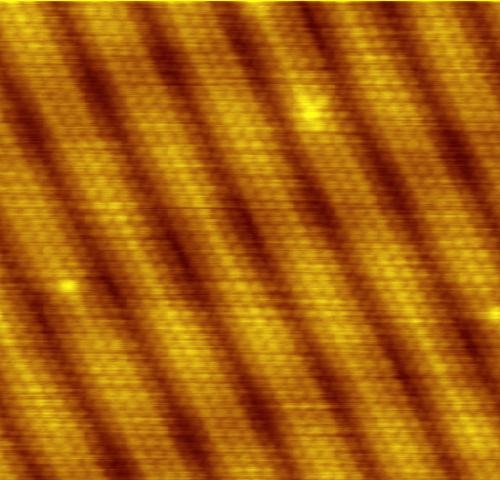

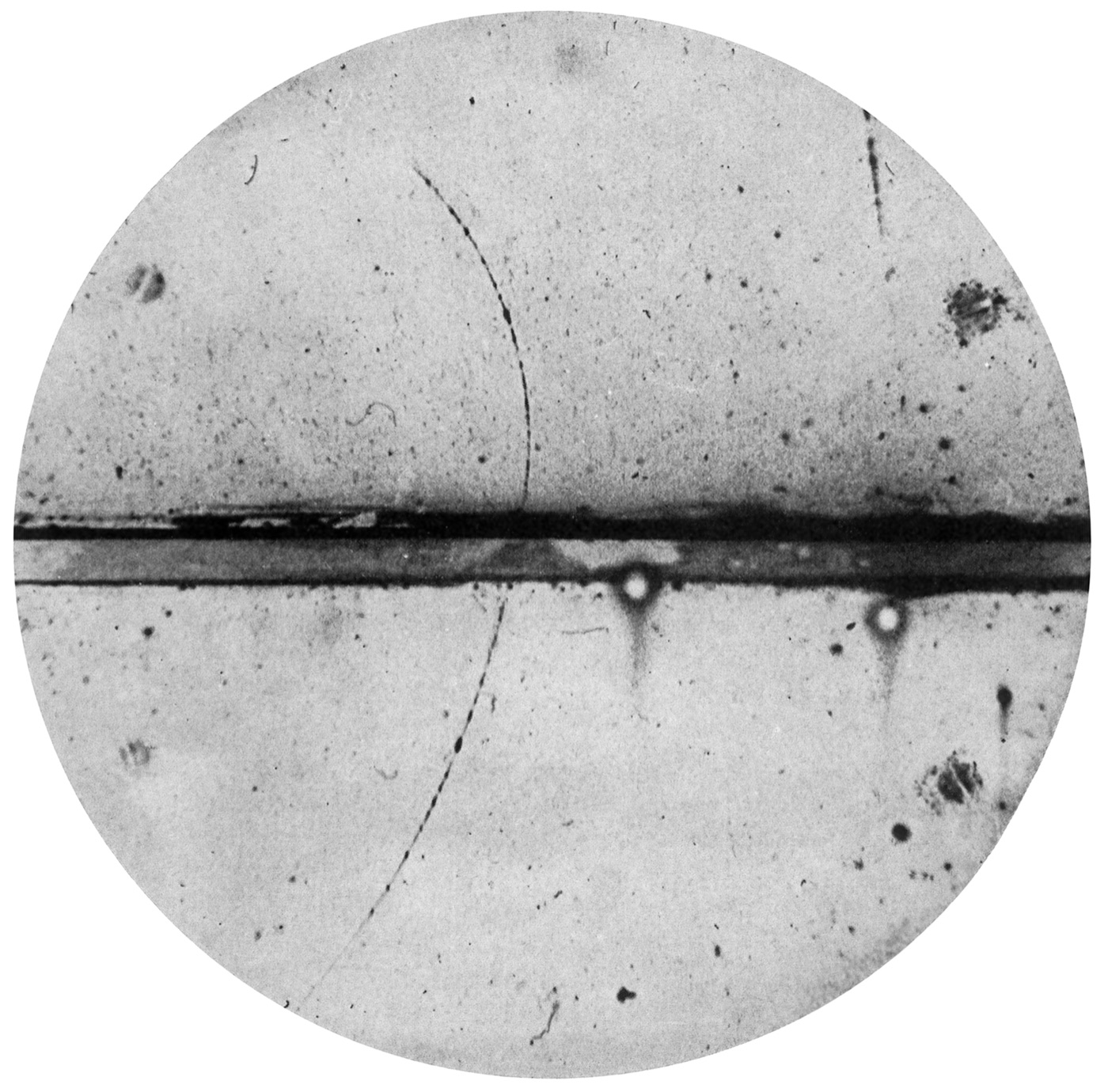

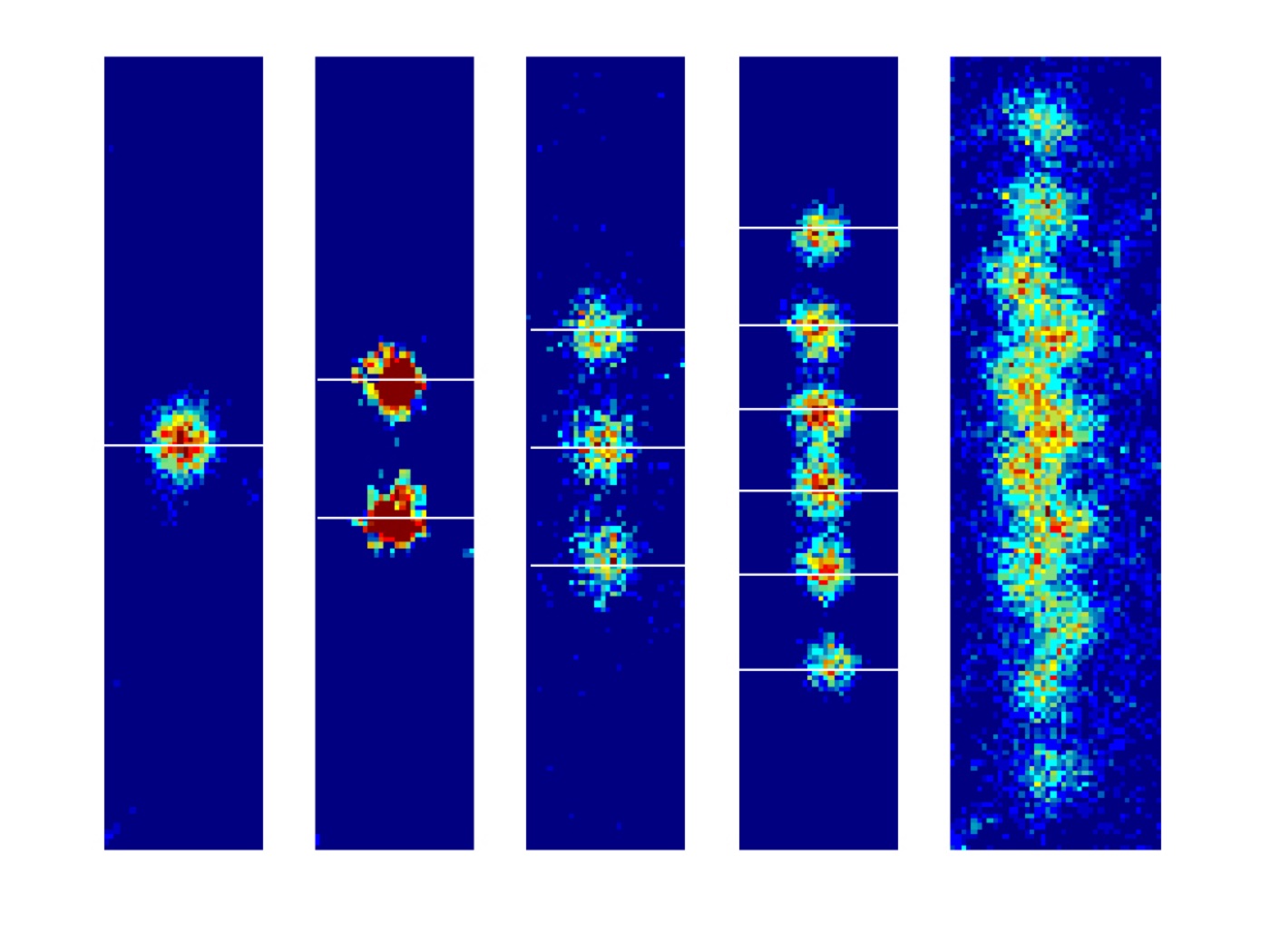
.jpg)
- A single atom, photographed with an ordinary camera — David Nadlinger's "Single Atom in an Ion Trap" (2018): one strontium atom, glowing between the electrodes, visible to the naked eye.
- The first image of a hydrogen atom's orbital — a "quantum microscope" mapping the electron's actual wave-shape around a single proton (Stodolna et al., 2013).
- The first picture of a molecule's bonds — IBM's atomic-force-microscope image of pentacene, resolving the individual atoms and chemical bonds (Gross et al., 2009).
The framework everyone starts with. You are a small thing inside a vast universe. Matter came first. Your brain produces consciousness. Reality is the input, you are the output. It feels obvious — it's the water we swim in.
This view is what science has been operating inside for ~400 years, and it's spectacularly successful at predicting how stuff behaves. The next stages aren't about throwing it away — they're about noticing the one place it has never been able to look: the looker itself. Every other discipline gets to step outside its subject. Physics studying the universe is the universe studying itself, and that loop produces strange results when you take it seriously.
In real life — The everyday "world is just stuff out there" idea is what all science and tech is built on. You don't have to throw it away.
The big idea — It has one blind spot: it can't look at the one doing the looking — you. That blind spot is what the rest of the app pokes at.
Every atom, every telescope, every scientific discovery is an appearance inside experience. You have never met matter outside consciousness. You have one direct data point for awareness — your own — and you infer everything else from inside the bubble.
Test it: try to think of a single piece of evidence for the external world that is not an event inside your experience. The Big Bang is a theory you read. The Eiffel Tower is a memory or a photo. The atoms in this screen are inferred from instruments whose readings you saw. Even other people being conscious is an inference — you've never accessed anyone else's inner life. The "external world" is always an internal event. This isn't denying the world. It's noticing that the only access route runs through experience.
Named source — and this part is mainstream. You don't even perceive the world directly: modern neuroscience says perception is the brain's constructed best guess, checked against sensory signals but never a raw window onto reality. Anil Seth calls it a "controlled hallucination"; Karl Friston formalises it as the free-energy principle — the brain as a prediction machine forever minimising the gap between its model and its inputs. What you experience is the model, not the world behind it. → Seth, Being You (2021) · Friston, Nat. Rev. Neurosci. (2010)
In real life — Your brain never sees the world directly — it makes a best guess and shows you that. It's why optical illusions fool you and why eyewitnesses get things wrong.
The big idea — The only thing you can be 100% sure is real is your own experience. Everything else, you're trusting second-hand.
The last stage ended on a sentence — the only thing you can be sure is real is your own experience — that is quietly doing two jobs, and they belong to two different branches of philosophy. "I can be sure" is epistemology: the study of knowledge — what can be known, and with how much confidence. "…is real" is metaphysics: the study of what exists, independent of anyone's knowing it. Most claims only ever manage one of those. This one does both at once, and that is exactly what makes it the right foundation stone for everything that follows.
Why it survives every attack: it is self-confirming. Try to doubt that awareness exists — the doubt is itself an event in awareness. The act of questioning supplies the evidence. Augustine spotted this around 417 AD (si fallor, sum — "if I am mistaken, I am"), and Descartes rebuilt all of modern philosophy on it in his Meditations (1641) — the slogan cogito, ergo sum is from his earlier Discourse (1637). It is immune even to the strongest skeptical scenarios: a perfect deceiver, a simulation, a brain in a vat — every one of them still requires someone experiencing the deception. The trap door has no floor under it.
But be precise about how little it buys. Lichtenberg's famous objection to Descartes: the certainty is "there is thinking" — not "I, an enduring self, am doing it." The bulletproof core is one clause — experiencing is happening. The self that seems to own the experience, with a name and a history, is already an inference layered on top (Stage 19 returns to this). Strictly speaking, even calling it "my awareness" claims more than the evidence in hand.
The hard part is everything else. Cross the line from awareness to anything beyond it — matter, space, the past, other minds — and certainty is gone for good. This is the classic problem of the external world, and four centuries of escape attempts have not produced one that gets certainty back:
- Descartes (1641) — a non-deceiving God guarantees the world. Even his contemporaries caught the circularity (the "Cartesian circle"): he needs the God to trust his reasoning, and his reasoning to prove the God.
- Berkeley (1710) — dissolve the gap by denying matter: only minds and experiences exist. Consistent, never refuted — but it relocates the mystery rather than solving it.
- Kant (1781) — we can know the structure of how things appear (space, time, causation are the mind's formatting), but the thing-in-itself stays forever out of reach.
- Moore (1939) — raised one hand: "here is a hand, therefore an external world exists." Honest common sense, but it assumes exactly what the skeptic is questioning.
- Russell & modern science — the external world is an inference to the best explanation: the simplest hypothesis for why experience is so stable, shared and surprising. Almost certainly the right bet — but a bet, not a proof.
So the two projects are not equally hard — and this app runs on the asymmetry. Establishing what you can know, and with how much confidence, is tractable: that is literally what the colored badges on every stage are — an epistemic ranking, from solid science down to probably not real. Establishing what reality is is the harder, maybe unfinishable project. The badge system is this site's epistemology; the awareness-first flip in the next stage is its metaphysics. Hold the two apart and you get the honest position: one bulletproof data point (experiencing is happening), plus a ranked stack of inferences — and the remaining stages are physics pushing that inference stack as deep as it currently goes.
Named sources. Augustine, City of God XI.26 (written ~417) · Descartes, Meditations on First Philosophy (1641) · Lichtenberg, Sudelbücher K76 (c. 1790) · Kant, Critique of Pure Reason (1781) · Moore, "Proof of an External World" (1939) · → SEP, Skepticism about the External World · SEP, Descartes' Epistemology
In real life — Confidence and truth are different things, and keeping them apart is what courtrooms, medical tests and good science run on. Evidence ranks your beliefs; it doesn't mint reality.
The big idea — This whole walkthrough gets exactly one free move: "awareness exists" — the claim that proves itself when you doubt it. Every other claim on the site has to earn its badge.
If you can never meet matter outside experience, claiming matter is more fundamental is a leap, not an observation. On this view, awareness is the field, and matter is what its patterns look like from the outside — like your right hand touching your left, one thing with two appearances. To be clear, this is a reframing, not a finding: it's the inversion the badge above flags as unproven.
In plain English: science has always assumed there's a world out there, and minds are a strange by-product that somehow appeared in it. The flip says — hold on. The only thing we've directly verified is the minds. Everything else is an inference made from inside a mind. So if anything gets to be called "the basic layer," it has to be awareness. The world isn't being denied — it's being re-located as how awareness appears when it's organized into patterns. Nothing practical changes. Physics still works. What changes is which side of the equation is the mystery.
In real life — Nothing changes — the math and the gadgets work exactly the same either way.
The big idea — Maybe your mind isn't made by your brain — maybe "stuff" is just how mind looks from the outside. A cool idea, but nobody can prove it, and it may never be testable.
The proposal here: rather than two stuffs (matter + mind), perhaps just one — information, with science describing its exterior and experience its interior. Wheeler gestured this way with the participatory universe: reality isn't pre-built but crystallizes through interaction. Treat it as a candidate framing, not a settled fact.
The word gets used in three different ways. Keeping them separate matters.
- Everyday meaning. "Facts you know." A weather report. A textbook. This isn't the relevant sense.
- Shannon information (1948). A precise mathematical measure: how much uncertainty is removed when you learn the value of something. Measured in bits. This is what powers every hard drive, fiber-optic cable and AI model on earth. It's the quantitative sense — useful, but still describes the exterior.
- Information as the substrate (the sense used here). Not "facts" or "bits stored somewhere." It's the existence of distinctions and relationships — the fact that anything is differentiated from anything else. Before particles, before space, before time: the bare structure of "this is not that, and here is how they relate."
John Wheeler — the same physicist behind black holes, wormholes, and the participatory universe — coined the slogan "It from Bit" in 1990. His claim: every physical thing (every "it") derives its existence from yes/no answers to questions — from distinctions being drawn. Particles, fields, spacetime itself — all of it is how a vast web of distinctions looks when something inside that web measures another part of it.
And this is no longer only philosophy — there is now hard physics pointing the same way. Over the last two decades a major research program has found evidence that spacetime itself may be built out of entanglement. The holographic principle ('t Hooft, Susskind) and Maldacena's AdS/CFT (1997) showed a 3D gravitational universe can be fully encoded on its 2D boundary. The Ryu–Takayanagi formula (2006) ties the amount of entanglement directly to geometric area. Van Raamsdonk's "Building up spacetime with quantum entanglement" (2010) showed that if you switch off the entanglement, the spacetime falls apart. And ER=EPR (Maldacena & Susskind, 2013) proposes that entanglement and wormholes are the same thing. This is the live "It from Qubit" frontier — the closest physics has come to making Wheeler's slogan more than a slogan. → overview
So is information the same thing as the vacuum? No — and this is the part worth getting right.
- The quantum vacuum is a physical object: the ground state of the quantum fields. It has measurable energy. It produces the Casimir effect. It is described by physics, sitting on the science / exterior side of the coin in Stage 6.
- Information, in the sense used here, is the relational layer underneath any physical description. It is what the vacuum and the fields and the particles are all expressions of. It has no location, no energy, no "where" — because location and energy are themselves features of the rendered description.
Put differently: the vacuum is the lowest level physics can currently see. Information is the level the framework infers beneath it — the level at which "exterior" and "interior" haven't been split yet. The vacuum is information's exterior face at minimum energy. Experience is information's interior face. Both are the same coin from opposite sides.
Honest caveat: that the vacuum exists is settled physics. That information is the deeper layer is a philosophical claim consistent with physics but not yet proven by it. Wheeler proposed it. Tononi's IIT (Stage 18) tries to formalize it. The AI + quantum experiment in Stage 21 is the first place this could become testable rather than interpretive.
In real life — Top physicists are seriously using this idea to crack how gravity and black holes work.
The big idea — At the very bottom, reality might be made of connections and patterns, not tiny bits of stuff. The links come first; the "things" come after.
Like a videogame that doesn't draw the map until you walk there: the definite world crystallizes at the point of engagement. The telescope didn't reveal Jupiter's moons hiding in the dark — it participated in what became actual.
Important clarification, so this isn't misread as simulation theory: there is no programmer. There is no designer. "Rendering" is a metaphor for the relationship between potential and actuality, not a claim that someone is running a server somewhere. The rules themselves are enough. In the standard (Copenhagen) reading of quantum mechanics, a system has no definite values until it is measured — only probabilities; that much is textbook since 1927. Why a measurement yields one definite outcome is the unsolved "measurement problem," and rival interpretations disagree — many-worlds (a deterministic wavefunction, with outcomes definite only within a branch) and Bohmian mechanics (always-definite particle positions) need no observer. But "definiteness at the moment of interaction" isn't fringe: it is the explicit content of two serious modern frameworks, Relational Quantum Mechanics (Rovelli, 1996) and QBism. The rendering picture is a plain-language version of that view — not a claim that it is the only one.
One thing this does not mean: "engagement" here is any physical interaction — a detector, a dust grain, a stray photon, even a thermostat — not a conscious mind. Decoherence does the work; awareness is not required (Stage 25 spells this out). Whether conscious observation adds anything beyond ordinary interaction is a separate, far weaker claim — the one tested, and expected to fail, in Stage 21.
Named source. The "physical world is an evolved interface, not a window onto reality" framing is Donald Hoffman's interface theory of perception and conscious realism — backed by evolutionary game-theory models — formalised as the Fitness-Beats-Truth theorem (Prakash et al., 2021), in which perceiving fitness payoffs is selected over perceiving the world accurately. (The theorem is real but contested.) The respectable, defensible core is "perception isn't perfectly truthful." The far bolder metaphysics built on top of it is flagged honestly where it appears (see the DMT-entities stage). → Hoffman, Singh & Prakash, "The Interface Theory of Perception," Psychon. Bull. Rev. 22(6):1480–1506 (2015) · Hoffman & Prakash, "Objects of Consciousness," Front. Psychol. 5:577 (2014)
In real life — This is just normal quantum physics — the thing that makes lasers, phone chips and MRI scanners work.
The big idea — Tiny things may not settle on a definite state until something bumps into them. But "something" means any bump at all — a speck of dust counts. You don't need a person watching.
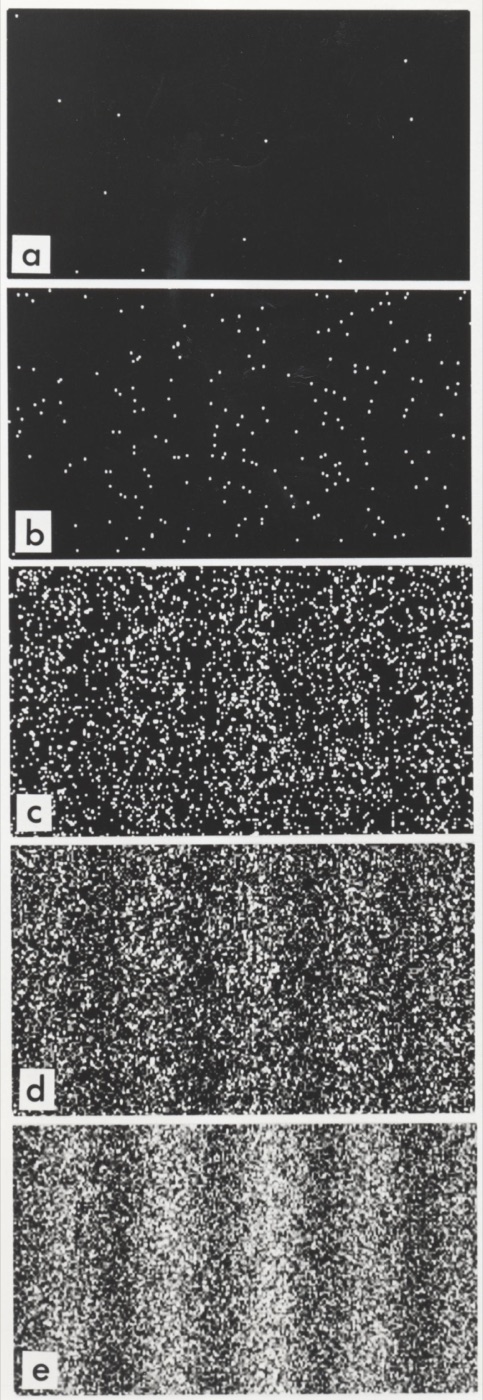

The photon is real and indivisible. Einstein showed in 1905 that light delivers its energy in discrete packets — the explanation of the photoelectric effect that won him the Nobel Prize (1921). A photon is the smallest possible amount of light: you cannot have half of one.
And yet a single photon interferes with itself. Send photons through a double slit one at a time — so slowly that only one is ever in the apparatus — and each arrives as a single dot in a single place. But let thousands accumulate and the dots pile up into bright-and-dark interference fringes. Each lone photon had to "sample both slits" to know where it was allowed to land. Grangier, Roger & Aspect established precisely this single-photon behaviour in 1986: using a genuine single-photon source, the same light shows particle-like anticorrelation at a beam-splitter and wave interference, depending on what you measure. → Grangier, Roger & Aspect, Europhys. Lett. 1, 173 (1986)
- The first photograph of light as both a wave and a particle — about the closest anyone has come to "photographing a photon" (EPFL, Carbone et al., 2015).
- A "quantum corral" — iron atoms ringed on a copper surface, with the trapped electrons imaged as visible standing waves (IBM, Eigler et al., 1993).
What "collapse" describes — and the honest open question. Before measurement the photon is described by a wavefunction ψ: a list of amplitudes for every possible outcome. The Born rule (Max Born, 1926, Nobel 1954) says the probability of each outcome is |ψ|². At the instant of interaction, all the amplitudes but one drop away. Why a single definite result appears — rather than the smooth spread the equation keeps evolving — is the unsolved measurement problem, the same one flagged in Stage 7.
Decoherence is the part we have watched happen. A quantum system doesn't stay isolated: it gets touched by stray photons, air molecules, the detector itself. Each contact entangles it with the environment and rapidly washes out the delicate wave-overlap that makes superposition visible — a process called decoherence. The Haroche group watched this unfold in real time, trapping a few photons in a superconducting cavity as a "Schrödinger-cat" superposition and observing it decohere step by step (Brune et al., 1996); the technique earned the 2012 Nobel Prize. Decoherence explains why we never see a blurred outcome — but it still doesn't single out which definite result you get. → Brune et al., Phys. Rev. Lett. 77, 4887 (1996)
So is collapse "real"? The data are not in dispute: single photons interfere, the Born rule predicts the statistics to extraordinary precision, and decoherence is measured. What's debated is the story. Copenhagen treats collapse as a basic event. Many-worlds and Bohmian mechanics keep the wavefunction smooth and never collapse it at all. Objective-collapse models (GRW) add a tiny physical collapse term and are actively being tested by experiments hunting for the faint heat it would produce — none seen so far. This stage reports the experiments; the interpretation tag is honest about the rest. And note: a "detector" is any physical interaction — a thermostat, a dust grain, an atom. A conscious mind is not required (Stage 25).
In real life — Controlling single specks of light is how we build codes that can't be hacked and super-sensitive sensors.
The big idea — Before you look, a particle is a blur of "maybes." The moment it's measured, it picks just one. We can watch this happen — but nobody knows why it picks.
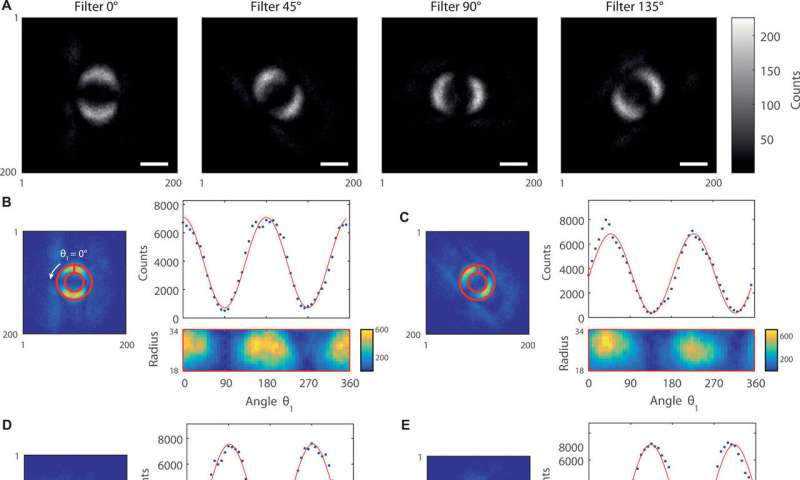
"Entanglement" is the wrong word — it implies two things got linked. What actually happens is the opposite: there was one state that appeared as two particles when it rendered into space. The perfect correlation isn't a connection. It's the residual fingerprint of the fact they were never two.
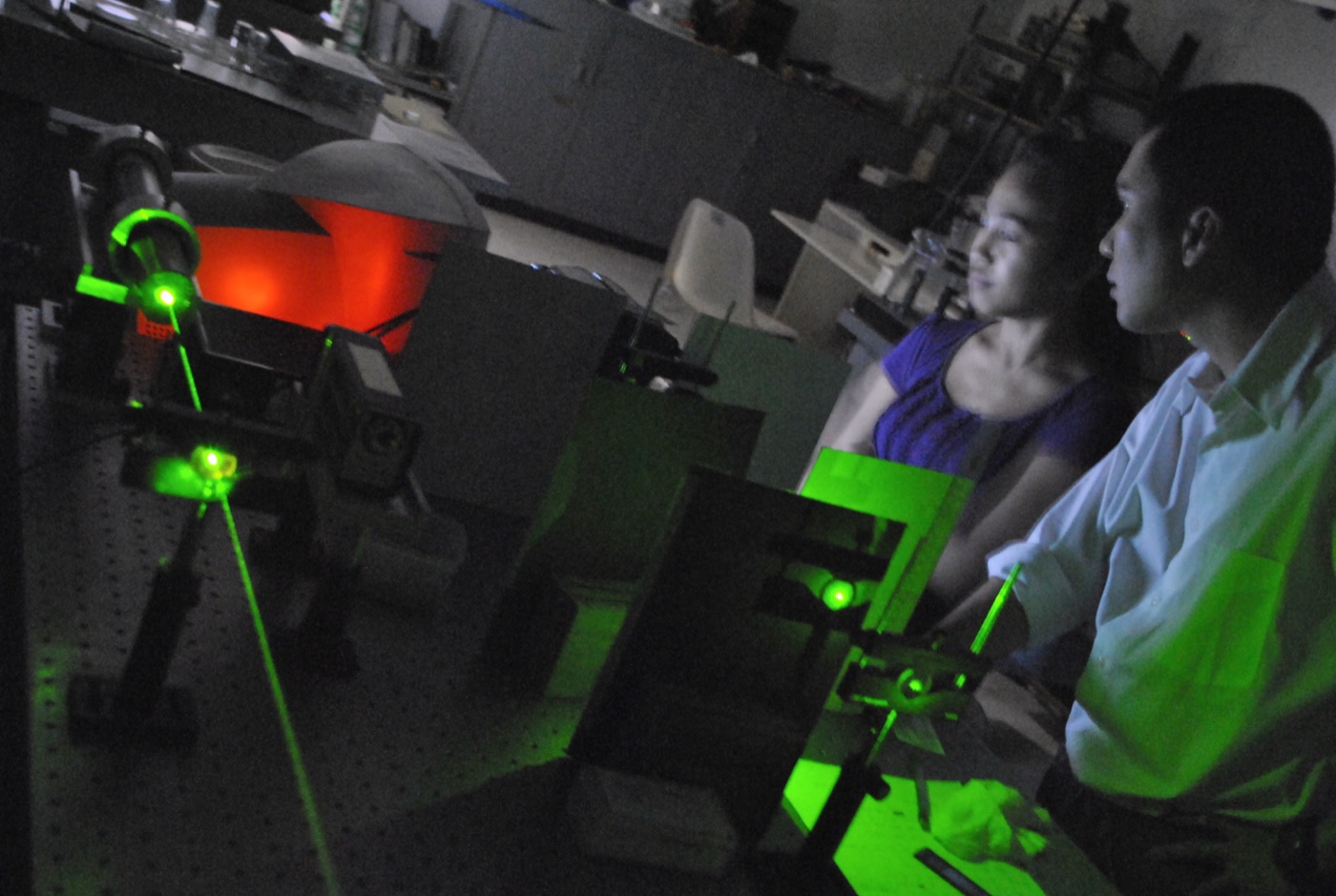

Einstein called this "spooky action at a distance" because, in the default view (Stage 2), it looks like one particle is sending a signal to its partner instantly across any distance — which violates relativity. Bell's theorem (1964) and decades of experiments (Aspect 1982, Zeilinger 2015, Nobel 2022) have ruled out every local-hidden-variable explanation. Physics has spent a century trying to rescue separation. The simplest move is to stop assuming there were ever two things. The "spookiness" is what happens when you describe one thing in a language that only has plural nouns.
And it isn't fragile lab-only magic. Entanglement scales: physicists have entangled the motion of visible aluminium drums about a fifth the width of a hair (NIST, 2021) and observed it between the highest-energy particles ever produced — top quarks at the LHC (ATLAS, 2024; confirmed by CMS). The same "oneness wearing a plural costume" reaches from engineered metal you could nearly see to the most violent collisions we can stage. → ATLAS, Nature (2024)
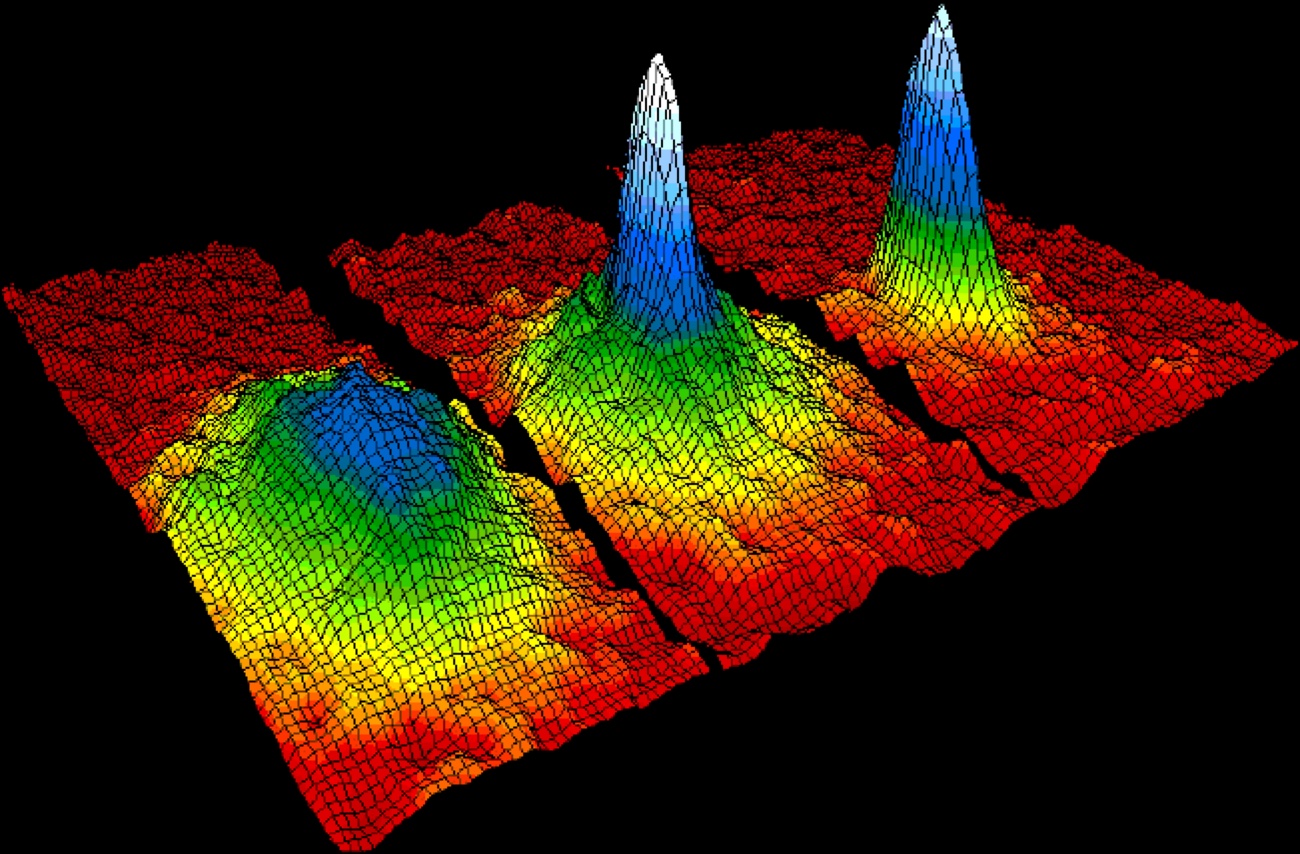

In real life — Already used today for codes that literally can't be cracked, and it's the engine inside quantum computers.
The big idea — Two far-apart particles can really be one thing. But you still can't use it to send a message faster than light — so no sci-fi telepathy.
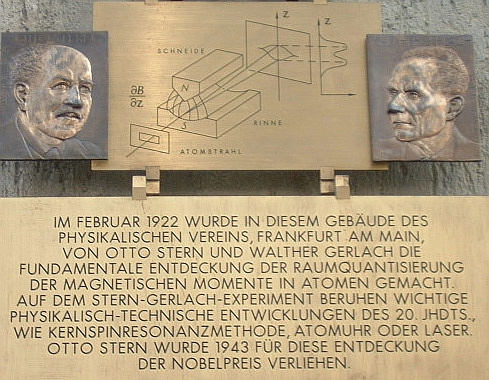

Spin is intrinsic, quantized, and proven. In 1922 Otto Stern and Walther Gerlach fired silver atoms through an uneven magnetic field. Classically the beam should have smeared into a continuous band. Instead it split into exactly two sharp spots: each atom's spin is either "up" or "down" along the axis you measure — never anything between. Spin isn't literal rotation; it's a fundamental two-valued property as real as charge or mass. → Gerlach & Stern, Z. Phys. 9, 349 (1922)
Spin is what "stays in sync" in entanglement. The cleanest entanglement experiments measure spin (or photon polarization, its light-equivalent). Prepare two particles in a shared spin-zero state and they are anti-correlated on every axis: measure one "up" and its partner is "down," instantly, no matter how you turn your detectors. That exact pattern is what Bell's theorem turns into a number — and what the loophole-free experiments (Hensen 2015; Nobel 2022, Stage 9) confirmed beyond rescue. The correlation isn't a signal passing between them; it's the single shared state of Stage 9 showing its hand.
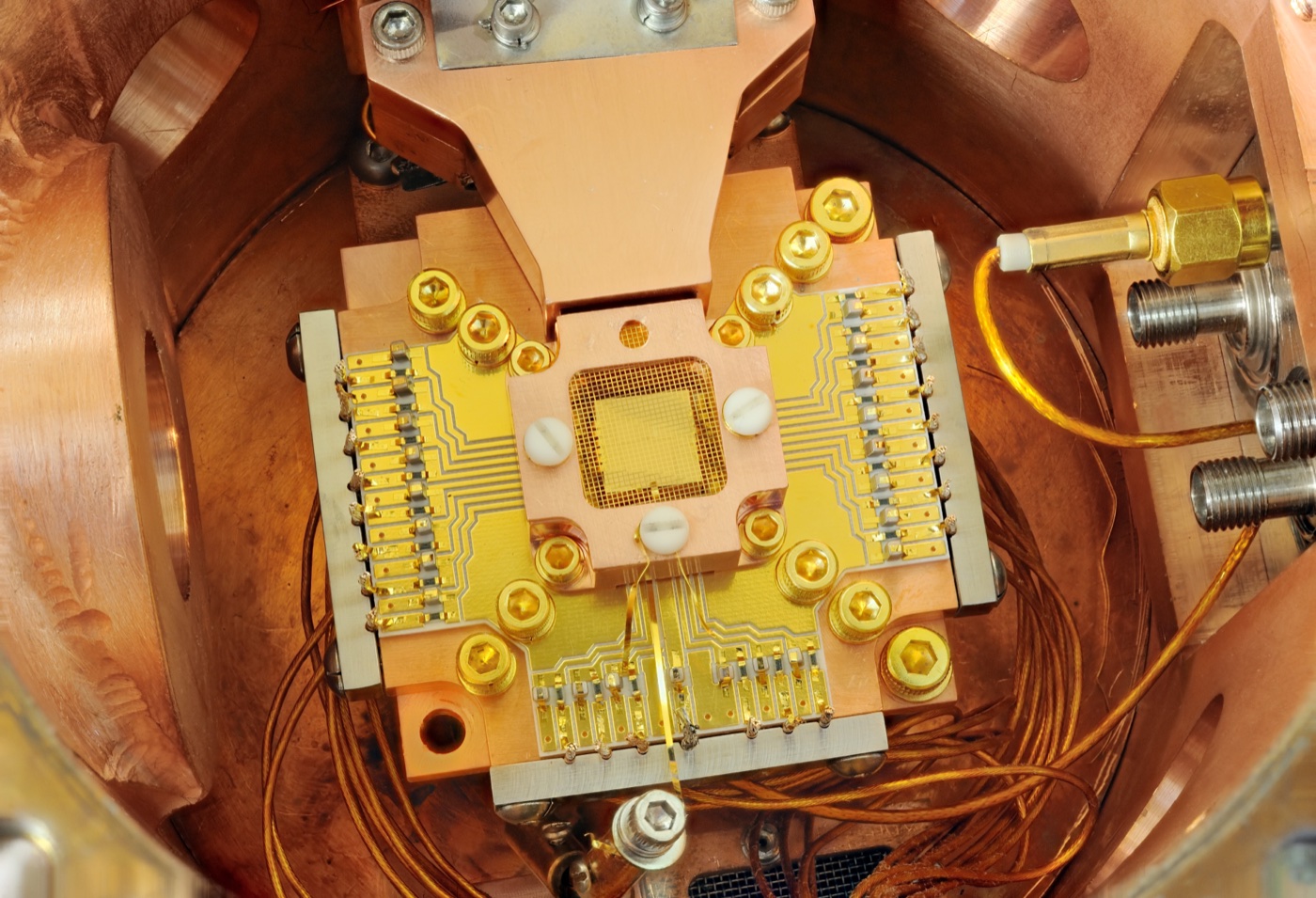
From spin to computing: the qubit. A classical bit is 0 or 1. A qubit — an electron spin, a photon's polarization, a superconducting loop, a trapped ion — can be held in a controlled superposition α|0⟩ + β|1⟩ before measurement. Put n qubits together and entangle them, and the machine tracks 2n amplitudes at once: 300 qubits hold more amplitudes than there are atoms in the observable universe. That is the resource quantum computing runs on.
.jpg)
The catch — and why it's still hard. You can't simply read all 2n numbers; measuring gives you one outcome (the collapse of Stage 8). A real quantum algorithm — Shor's factoring (1994), Grover's search (1996) — is the art of arranging interference so the amplitudes for wrong answers cancel and the right answer is overwhelmingly likely to appear. The enemy is decoherence (Stage 8): qubits lose their superposition the instant the environment "measures" them by accident.
And it is now real hardware, not a thought experiment. Google's Willow processor (2024) crossed a long-sought threshold: adding more physical qubits made the encoded logical qubit more stable, not less — the first convincing demonstration that quantum error correction beats the decoherence it's fighting. That moved large-scale quantum computing from "is it possible?" to "engineer the scale-up." The full buildability-and-limits picture is in Stage 24. → Google Quantum AI, "Quantum error correction below the surface-code threshold," Nature 638, 920 (2025)
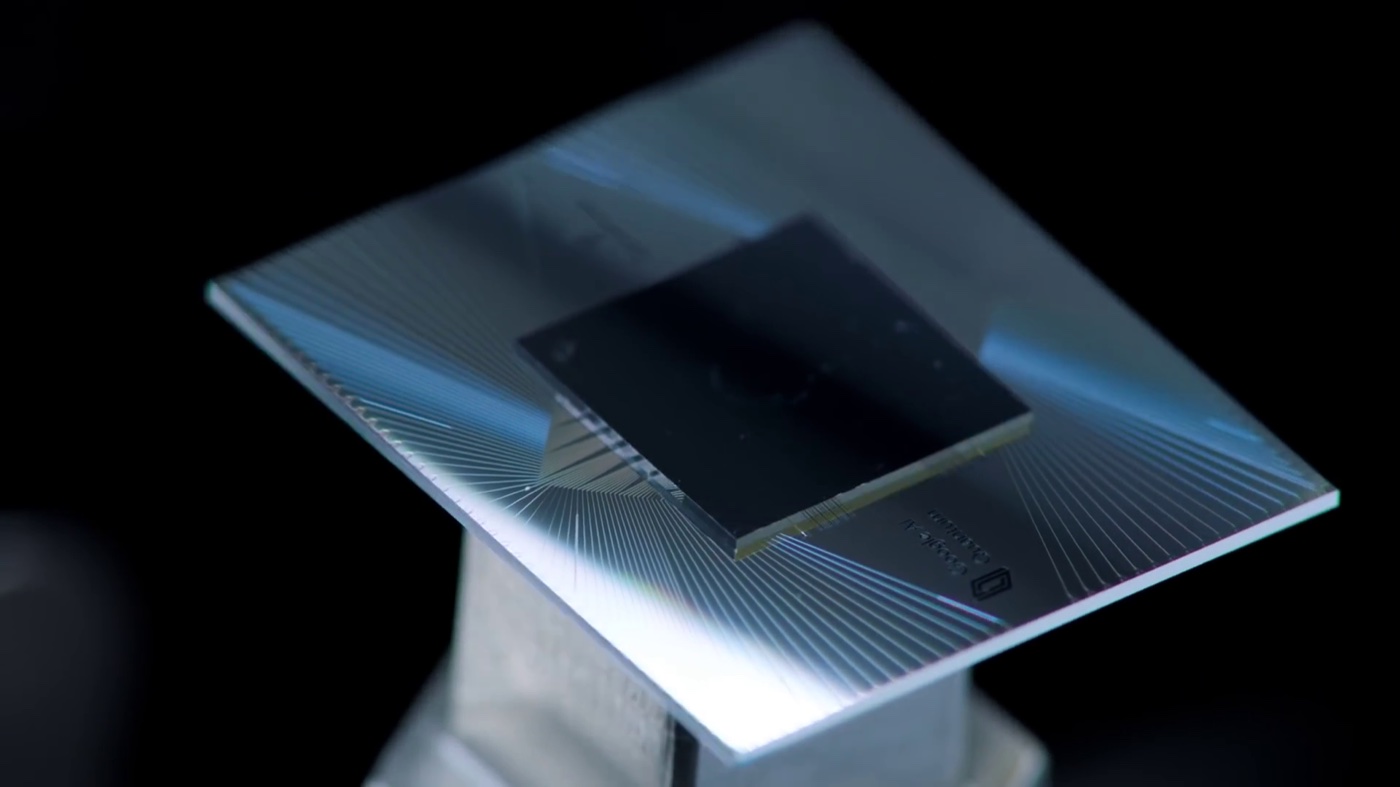

Honest status. Spin and the Stern–Gerlach result are century-old textbook physics. Qubits, superposition, and entanglement-as-a-resource are demonstrated daily in dozens of labs and shipping in early commercial machines. What is not yet here is the large, fully fault-tolerant computer — that's an engineering curve in progress, not an open question of principle. No claim on this page needs the speculative material elsewhere in the walkthrough.
In real life — These computers will crack today's passwords, help design new medicines, and solve puzzles normal computers can't — and they're being built right now.
The big idea — Nature can run many calculations at once. "Information" isn't just a fancy word — it's something real you can build a machine out of.
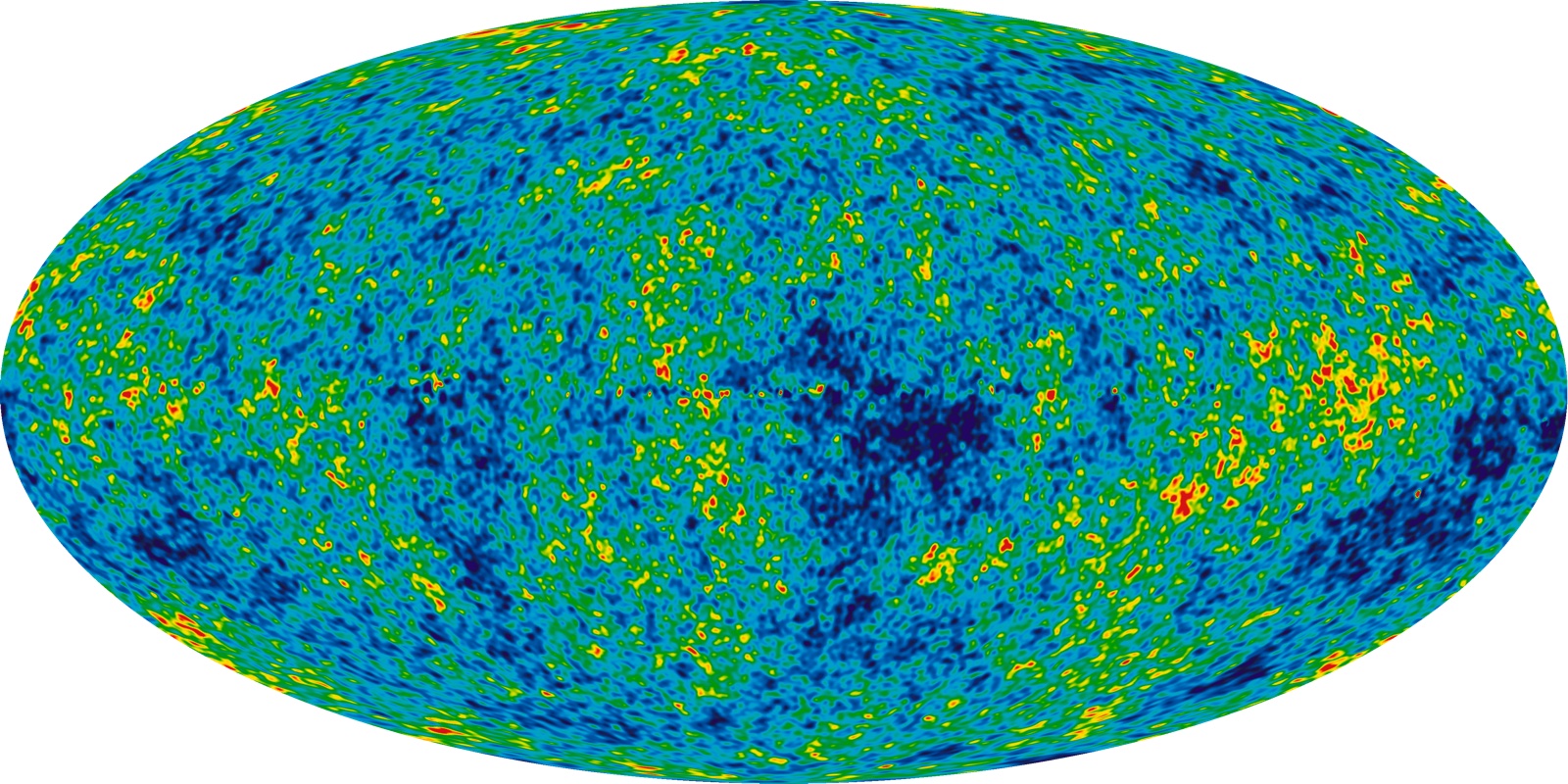

In Feb 2026 the STAR Collaboration (Nature 650, 65–71) measured something subtle and real: when a high-energy collision pulls strange quark–antiquark pairs out of the QCD vacuum to build new particles, the spin correlations of those pairs survive the violent confinement process and show up in the hyperons that emerge — an (18±4)% signal. A striking look at how the strong force turns vacuum fluctuations into ordinary matter. (Stated precisely: it shows quark-spin information surviving confinement — not, as headlines sometimes imply, the vacuum conjuring matter out of literal nothing.)
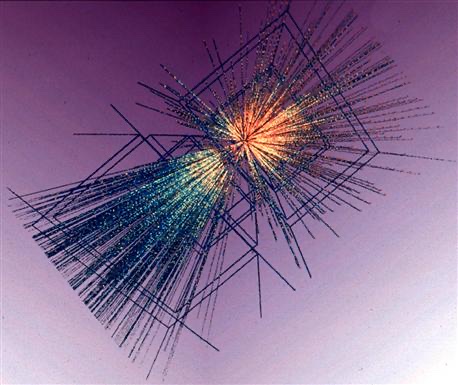

Forget the everyday meaning of "vacuum" — the inside of a thermos, outer space, an empty bottle. In physics, the quantum vacuum is the lowest possible energy state of a region of space. You take a volume, remove every particle, every photon, every detectable thing. What's left is the vacuum. And the strange fact is: it isn't empty.
The standard model of particle physics is built out of quantum fields — one field per type of particle. An electron is a localized vibration in the electron field. A photon is a vibration in the electromagnetic field. The fields exist everywhere, all the time. Even when no particles are present, the fields are still there — they just sit at their lowest-energy configuration. That configuration is not zero. The Heisenberg uncertainty principle forbids a field from having both an exactly-zero value and an exactly-zero rate of change. So the fields jitter, perpetually, at the smallest scales.
Those jitters are real. They produce virtual particle pairs — particles that briefly exist (a particle plus its antiparticle), borrow energy from the vacuum, and annihilate again before the universe "notices." This isn't speculation. We measure their effects:
- The Casimir effect (1948, measured 1997). Two metal plates placed nanometres apart in a real vacuum get pushed together — because the virtual particles between them have fewer allowed modes than the ones outside. You can weigh the vacuum's restlessness.
- The Lamb shift (1947). The energy levels of the hydrogen atom are slightly off from the textbook prediction — because the electron is constantly being bumped by virtual photons from the vacuum. Nobel Prize, 1955.
- The anomalous magnetic moment of the electron. Predicted to ~12 significant figures using vacuum contributions. Verified to the same precision. The most precise prediction in the history of science.
- Hawking radiation. Black holes slowly evaporate because virtual pairs near the event horizon get separated — one falls in, the other escapes as real radiation. (Honest caveat: this is the one entry here that has not been directly observed — real black holes are too cold and far away; only lab analogue systems have shown the effect.)
- STAR 2026. The newest entry. Strange quark–antiquark pairs drawn from the QCD vacuum during a collision keep their correlated spins all the way through confinement, imprinting an (18±4)% correlation on the hyperons they form — a direct window on how vacuum fluctuations become ordinary matter.
So "the vacuum" in this whole walkthrough means: the substrate of reality with all detectable content removed — which still contains the active, jittering fields that everything is made of. It is what the universe looks like when you subtract every "thing" but can't subtract structure itself. It is the closest physics has ever gotten to looking at the code beneath the screen — and it is overwhelmingly where mass, force, and the constants of nature actually come from.
A nuance worth keeping: the quantum vacuum isn't nothing. It's the lowest-energy state of something — the quantum fields. Whether there could be a state below it (true absolute nothingness with no fields at all) is a question physics currently cannot answer. As Stage 1 argued, that state may be impossible in principle.
In real life — We can measure and use the energy in "empty" space — it nudges tiny machines and gives the most exact predictions in all of science.
The big idea — Empty space isn't actually empty. There's no such thing as true nothing you can reach — only busy, buzzing space.
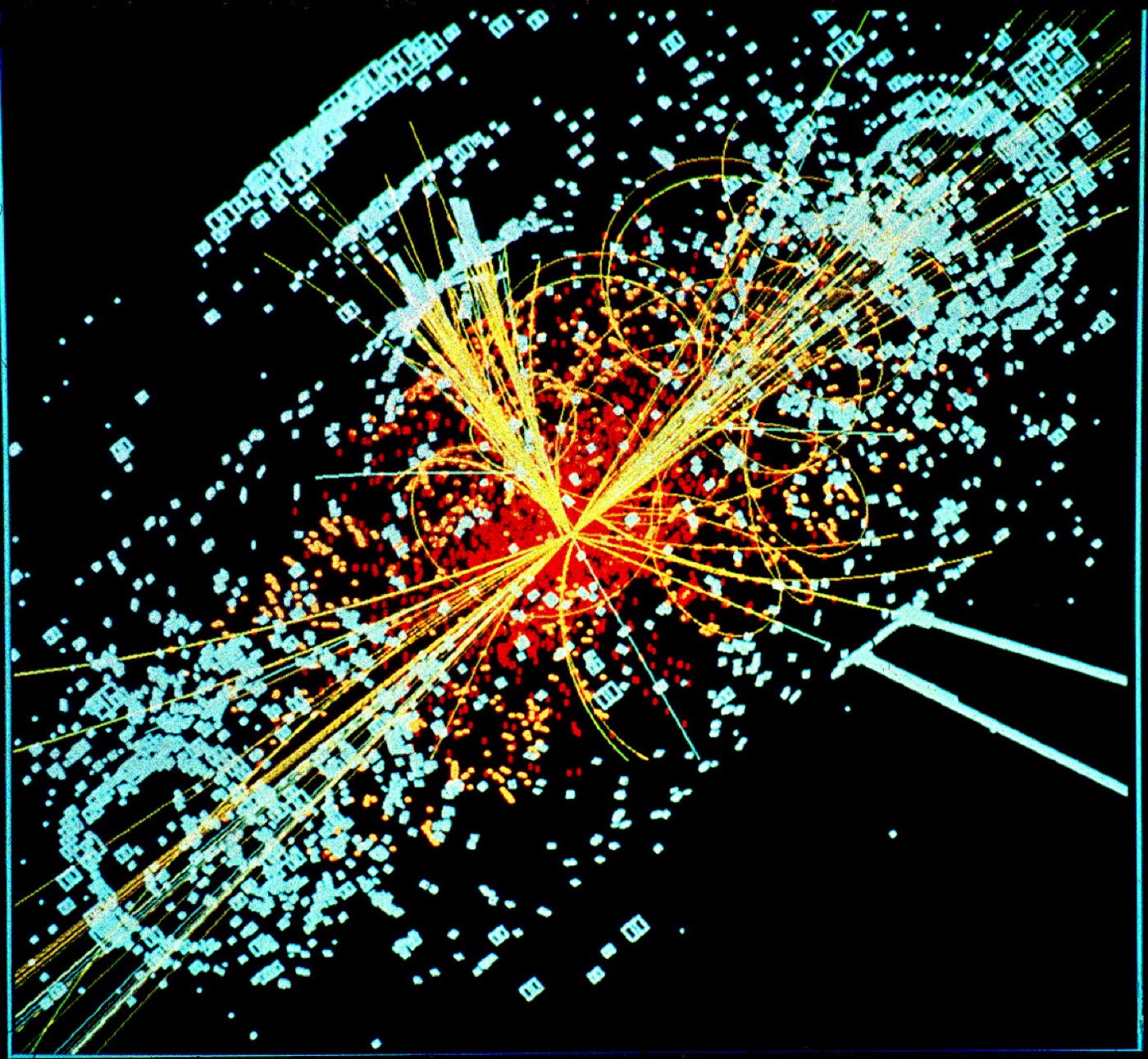

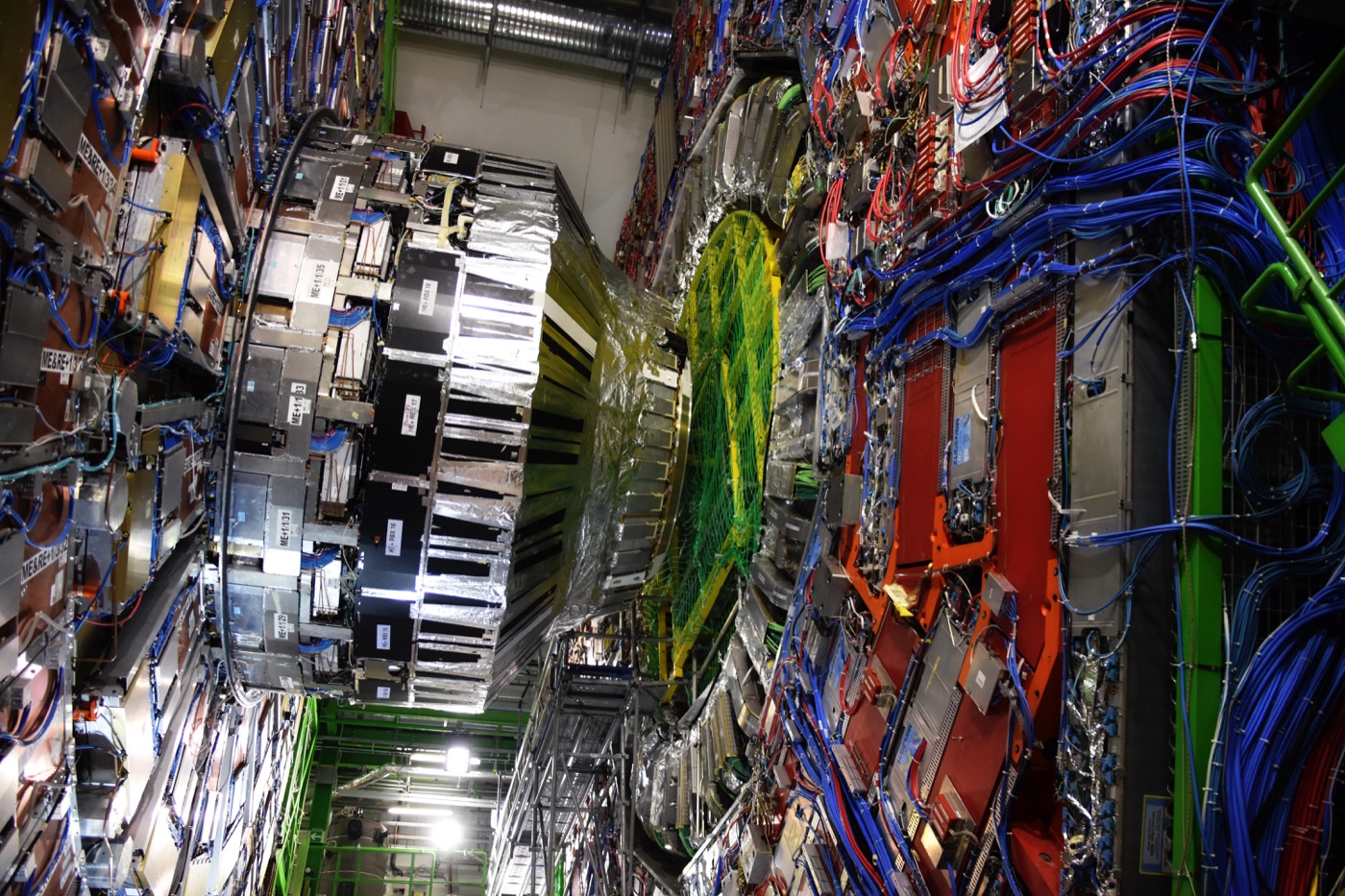

A proton is three quarks. You'd expect its mass to be about 3 quark masses. It isn't. Quarks supply less than 1% — the rest is gluon fields and vacuum interactions. The particles are nearly weightless. The rendering is heavy.
If 99% of a proton's mass is field energy, the obvious question is: what gives the quarks and electrons themselves the small rest-mass they do have? They are not made of anything smaller, so binding energy can't be the answer. The answer is the Higgs field — and it was the last missing piece of the Standard Model until it was directly confirmed.
What the Higgs field is. Like the other quantum fields (Stage 12), the Higgs field fills all of space — but unlike them it sits at a non-zero value even in empty space. Fundamental particles acquire their rest-mass by interacting with this ever-present field: the more strongly a particle couples to it, the more it resists being accelerated, which is exactly what we call mass. A photon ignores the field entirely, so it stays massless and travels at light-speed.
And it was confirmed by experiment. The field implies a ripple — the Higgs boson. On 4 July 2012 the ATLAS and CMS experiments at CERN's Large Hadron Collider independently announced its discovery at a mass of about 125 GeV, each at the 5-sigma gold standard. Peter Higgs and François Englert, who predicted the mechanism in 1964, shared the 2013 Nobel Prize. Since then its decay rates and spin-0 nature have been measured and match the Standard Model. → ATLAS, Phys. Lett. B 716, 1 (2012) · CMS, Phys. Lett. B 716, 30 (2012)
The honest distinction, because headlines blur it. The Higgs is often called "the origin of mass," but that overstates it. The Higgs gives fundamental particles their rest-mass — which is most of the story for an electron, but only about 1% of the story for a proton, and therefore for you. Take the Higgs away and electrons would be massless; take the strong-force binding energy away and you lose ~99% of your weight. Both are real; the rendering still does most of the heavy lifting.
In real life — Finding the Higgs particle completed our best map of how the universe is put together.
The big idea — About 99% of your weight isn't "stuff" — it's energy in motion. You're mostly buzzing energy, not solid matter. And this part is actually proven.
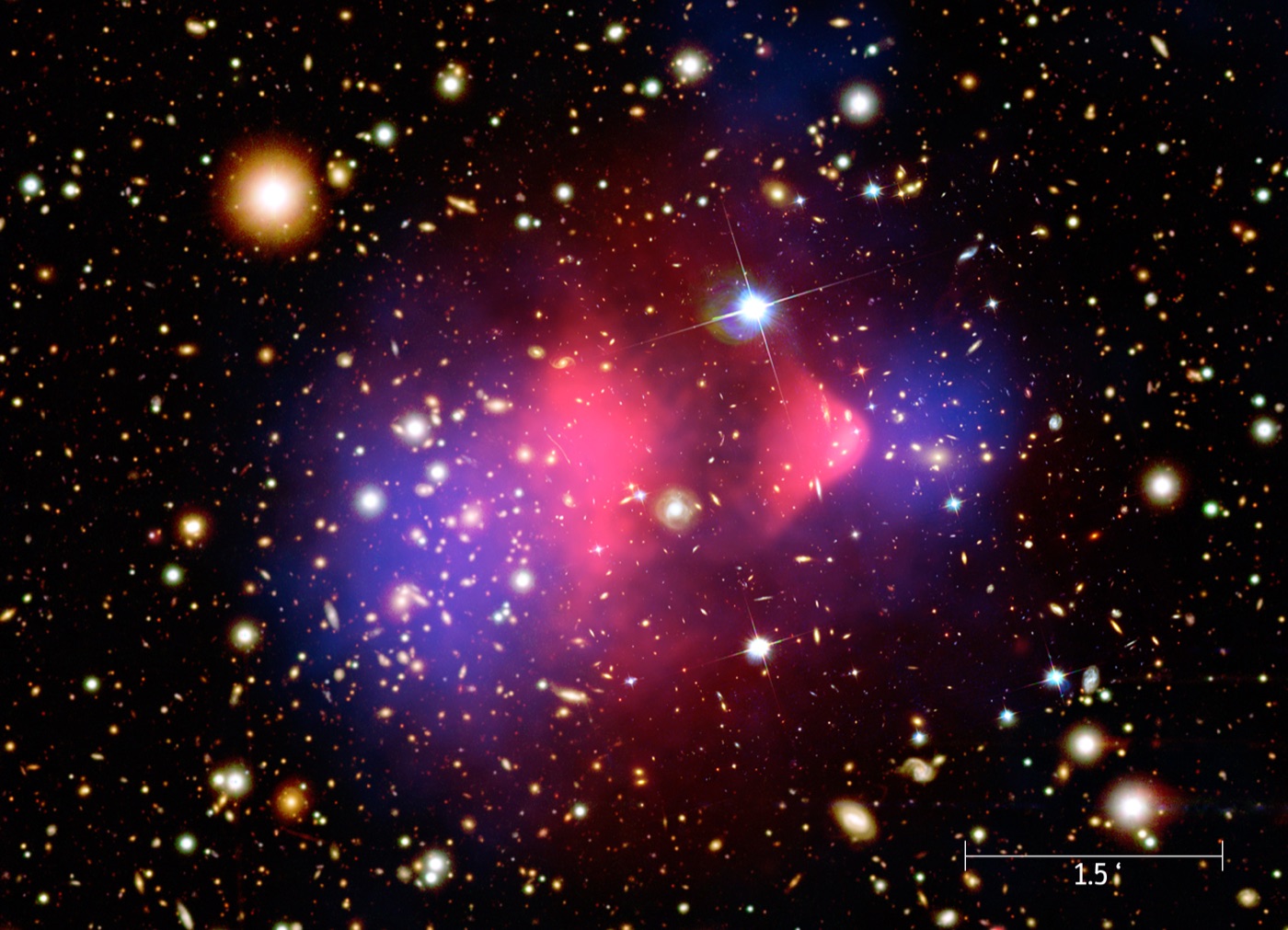

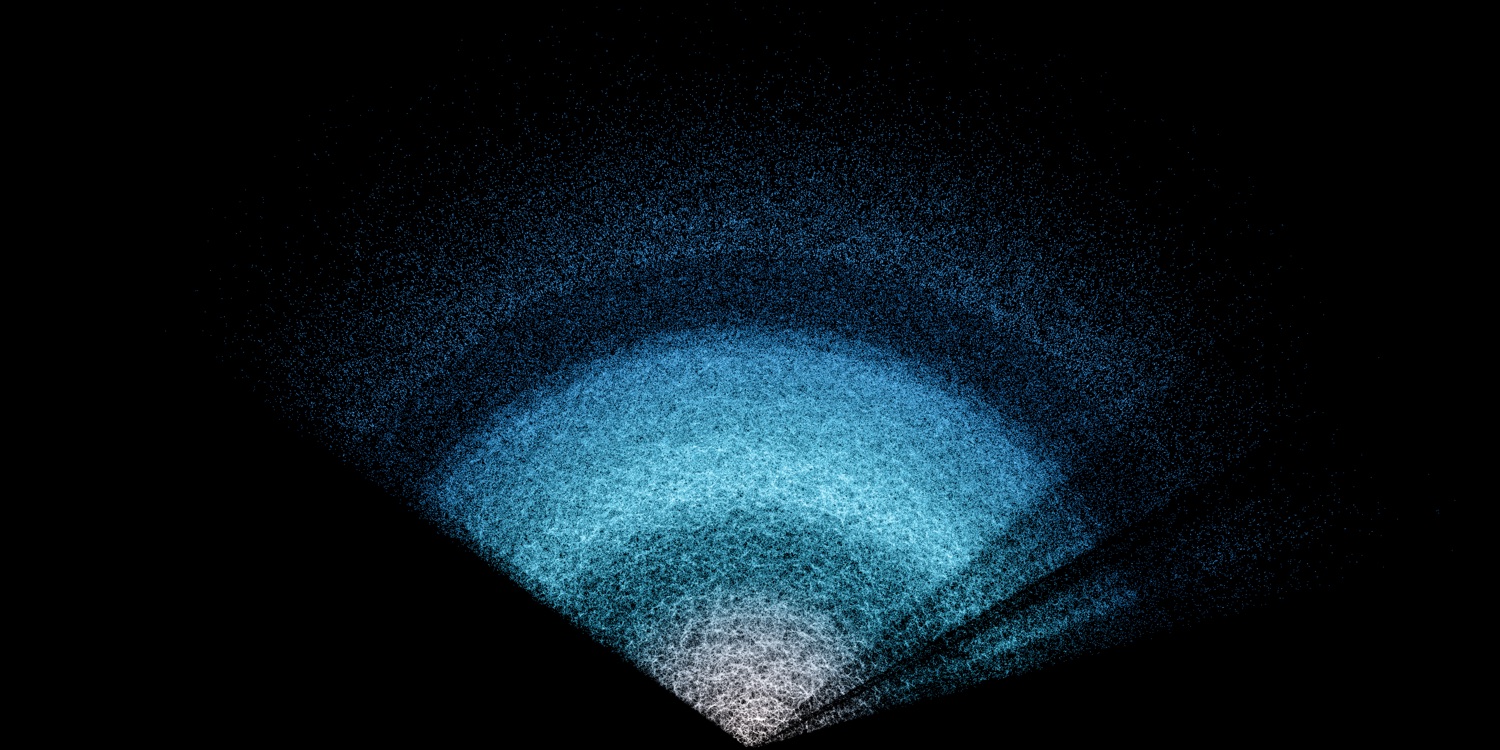
All four are seams where the boundary between code and screen becomes visible. About 95% of the universe is the code itself — doing things the screen can't fully represent. The well-behaved 5% is what physics has been describing for a century.
These aren't speculative. The 5% / 27% / 68% split comes from the Planck satellite (2018) and is the standard ΛCDM cosmological model. What's speculative is the interpretation. The dominant view in physics is "we'll find a particle for dark matter and an equation for dark energy and the picture will look normal again." That hasn't happened in 50 years of looking. The framework here suggests it might not, because they're not extra ingredients on the same screen — they're features of the underlying layer that the screen can only partially translate.
.jpg)
Fresh data (2025–26) — the standard model is creaking. Three cracks have widened, and an honest page has to report them straight:
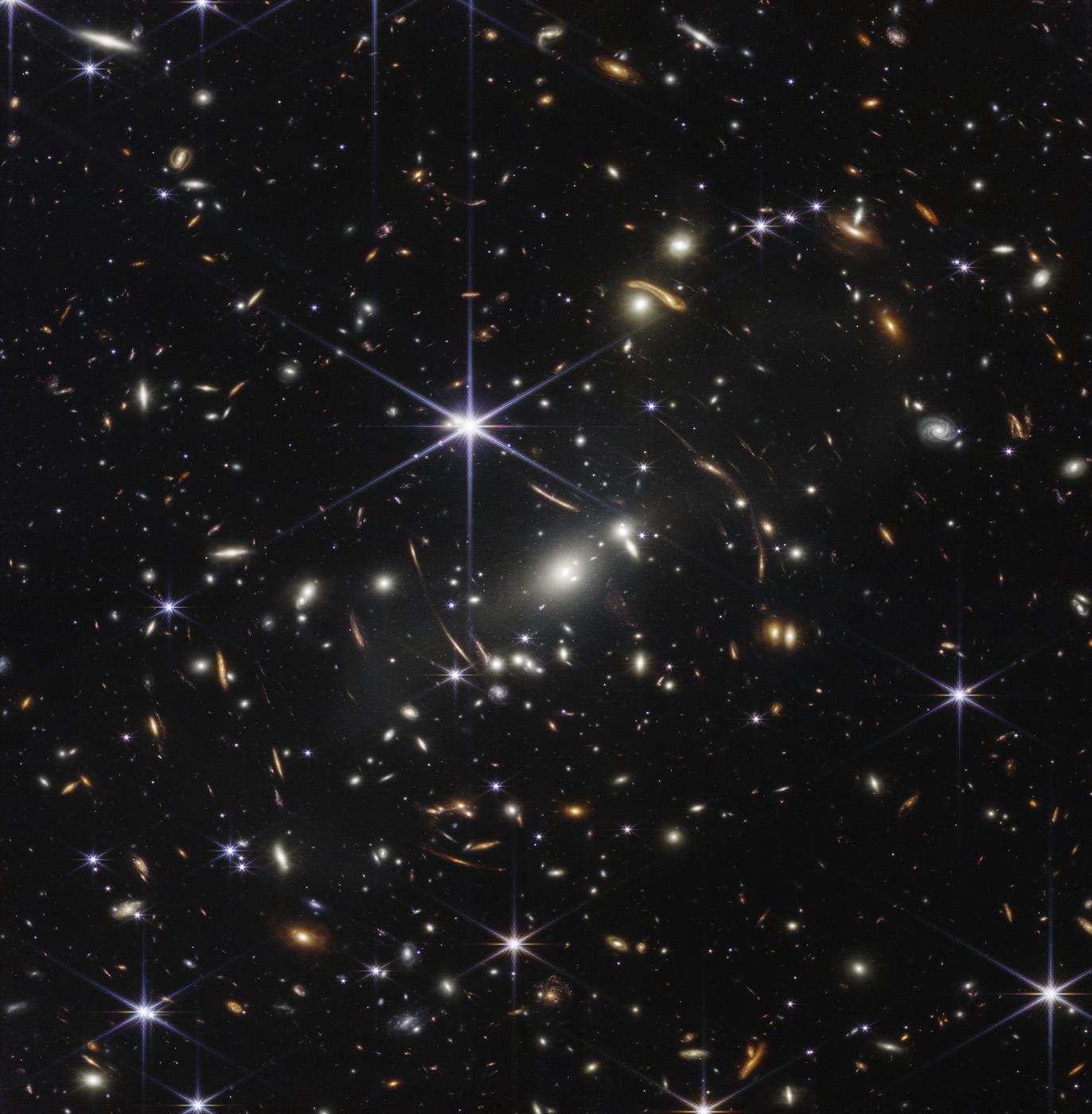
- Dark matter's "smoking gun" got questioned. The Bullet Cluster (pictured just above) has been the textbook direct proof of dark matter for ~20 years. In June 2026 a Bonn/Portsmouth team (Zhang, Banik & Kroupa) used fresh JWST star counts — plus the extra invisible mass of dead massive stars (neutron stars and black holes, betrayed by the cluster's high iron and oxygen content) — to argue the lensing can be reproduced by ordinary baryonic matter under MOND, with no dark matter required. Honest caveats: it's one contested paper (Physical Review D), MOND still fails elsewhere (the CMB, other clusters), and the authors concede dark matter isn't ruled out — only that if it's there, there's likely about half as much as assumed. But the single image everyone cited as case-closed is no longer clean. → Zhang et al. 2026
- Dark energy may be weakening. DESI's second release (Berkeley Lab / Fermilab, March 2025), mapping ~14 million galaxies and quasars, found hints that dark energy changes over time — which, if real, breaks the "cosmological constant" assumption baked into ΛCDM. Honest caveat: DESI's data alone still fit the standard model; the signal (~2.8–4.2σ) only appears combined with supernovae and the cosmic microwave background, and it is genuinely contested. → DESI DR2
- The "Hubble tension" hardened into a crisis. Two equally-careful ways of measuring how fast space expands keep disagreeing — ~67 km/s/Mpc from the early universe vs ~73 nearby. JWST has now confirmed the local measurement, ruling out a simple calibration error and pushing the gap past 5σ. Nobody yet knows if the fix is new physics or a hidden systematic. → Webb & Hubble on H₀
In real life — 95% of the universe is stuff we can't explain, and new telescopes keep making the puzzle bigger.
The big idea — We might be the tiny visible part of something much larger we can barely see — or a big piece of the picture is just missing. Honestly, nobody knows yet.
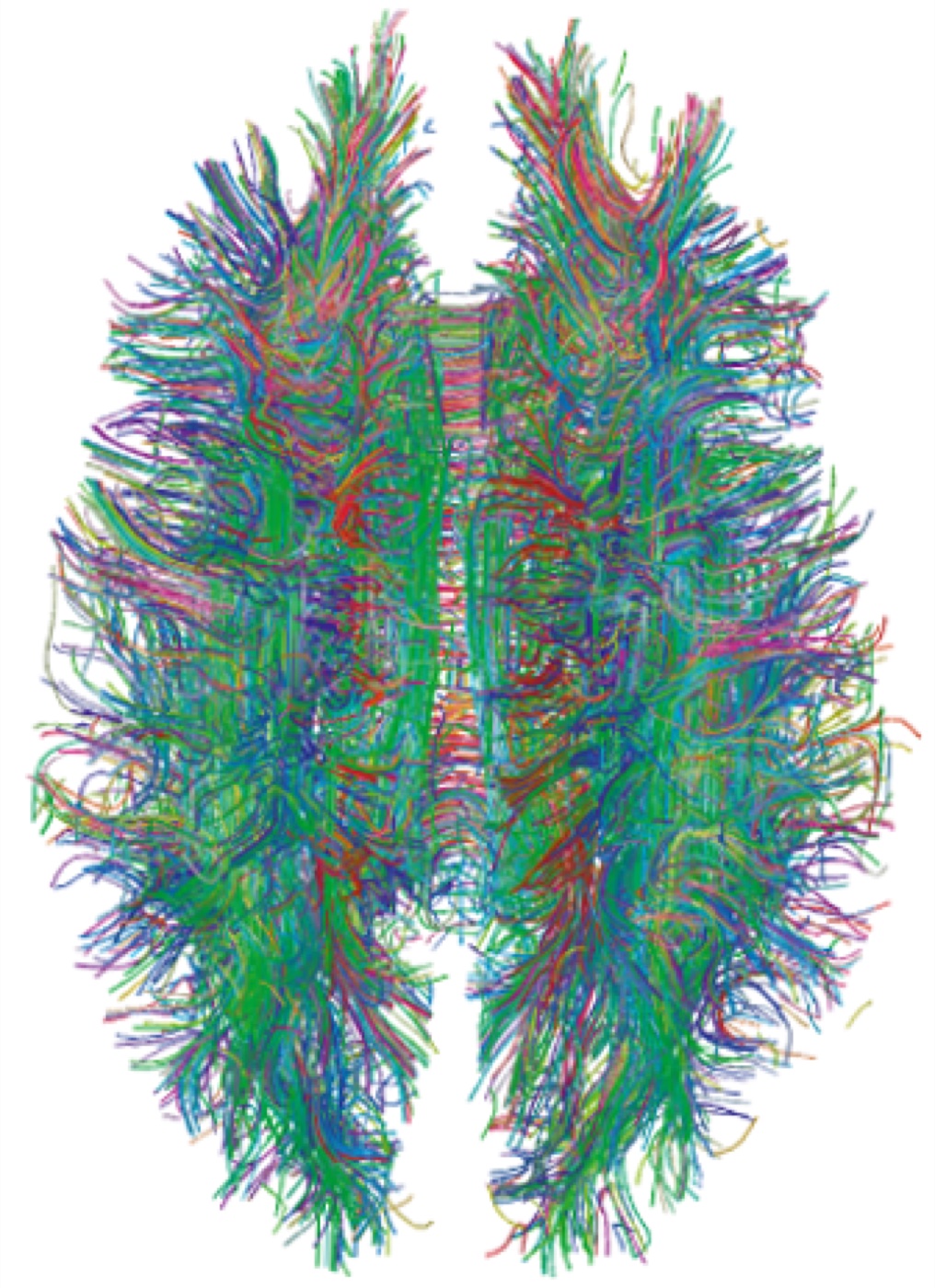

The honest answer: nobody knows the exact threshold. But every system we suspect of being conscious shares one structural feature — it processes information about its own processing. It loops back on itself. A thermostat reads the room. A neuron fires on input. An insect runs simple loops. A mammal brain runs recursive self-models — information about information about itself, dense enough that the system can refer to "I."
One conjecture is that the click isn't gradual: like water suddenly becoming ice, when self-referential complexity passes some threshold the system might stop blocking the default state and tune in — consciousness not added, but un-hidden by the right loop. Pushed to its most speculative edge, the framework pictures you less as consciousness plus a body and more as infinite potential minus everything you are not, with birth as a specific act of forgetting. That last step is interpretation, not science — the honest status is spelled out right below.
Notice that the diagram above hides a fork — two rival readings of the very same loop, with opposite causal stories:
• Emergence (mainstream, but contested) — the loop creates awareness. No recursive self-model, no "I." The feedback is the source; this is what IIT and Global Workspace are trying to formalize.
• Subtraction (speculative, unproven) — awareness is the default state (Stage 23) and the loop doesn't produce it, it filters it, tuning one frequency out of "everything at once." The loop un-hides rather than builds.
They wear the same picture but point in opposite directions, and nothing on this page settles which is right — the hard problem below is exactly why neither can yet be proven. When this site says consciousness "needs a loop," that's solid for emergence and only half-true for subtraction (where a loop makes you someone specific, not conscious as such).
This is the "hard problem" of consciousness: we can map every neuron and signal and still not explain why it feels like something. Integrated Information Theory (Tononi's Φ) and Global Workspace theory both try to formalize the threshold — neither has been verified, and IIT is contested enough that in 2023 over 120 researchers signed an open letter calling it "pseudoscience" (largely because its core quantity Φ is effectively unmeasurable in a real brain). The 2025 Cogitate test (Stage 21) found neither theory fully holds up. Honest status: this is live, unsettled science — not a solved problem.
In real life — Doctors already use brain scans to find awareness in patients who can't move or respond.
The big idea — We can track everything the brain does and still can't explain why it feels like anything to be you. That mystery is wide open.
If observation participates in reality, an active observer in a feedback loop with a true quantum RNG might produce a tiny drift from 50/50. But be clear about the prior: standard quantum mechanics says it won't — the no-signaling theorem and the Born rule mean a passive observer cannot bias a fair quantum coin. This is essentially the decades-old "micro-PK" hypothesis, which has come back null or contested every time (PEAR, the Global Consciousness Project — see the map below). It is worth running precisely because the framework predicts a drift and orthodox physics predicts none — but the honest expectation is null. Only a rigorous, pre-registered positive result would turn philosophy into physics.
Each claim in this walkthrough either has been tested, is being tested, or is waiting for a testable protocol. Below is the honest map. Only peer-reviewed work or experiments run by named institutions. Mixed and null results included — no cherry-picking.
1 · "Quark-spin correlations survive QCD confinement" → confirmed, freshly
- STAR Collaboration, Nature 650, 65–71 (Feb 2026). "Measuring spin correlation between quarks during QCD confinement." Λ–Λ̄ hyperon pairs at RHIC/Brookhaven showed an (18 ± 4)% spin–spin correlation, inherited from strange quark–antiquark pairs drawn from the QCD vacuum and surviving confinement. A clean probe of how the strong force builds matter — though it is sometimes over-popularised as "the vacuum creating matter." → nature.com · PMC full text · BNL newsroom
2 · "Separation is not fundamental" → confirmed to within a cosmic distance
- The 2022 Nobel Prize in Physics to Aspect, Clauser & Zeilinger, for loophole-free Bell tests establishing that no local hidden-variable theory can reproduce quantum correlations. Separation, in the way the default view assumes it, cannot be the full story.
- Cosmic Bell test, Rauch et al. Physical Review Letters (2018). Used photons from quasars 7.8 and 12 billion light-years away to choose the measurement settings — closing the "freedom of choice" loophole back to at least 7.8 billion years ago. → Quanta summary
- Loophole-free Wheeler delayed-choice experiment, Yu et al. (2018). Space-like separated photon states show that the "particle or wave" choice can be made after the photon has already encountered the beam-splitter. Consistent with quantum theory, inconsistent with any local hidden-variable story. → arXiv:1806.00156
3 · "Does consciousness have a specific neural signature?" → partial — theories are being pruned
- Cogitate Consortium, Nature (April 2025). "Adversarial testing of global neuronal workspace and integrated information theories of consciousness." An open-science adversarial collaboration between IIT and GNWT proponents ran identical experiments on 256 humans using fMRI + MEG + intracranial EEG. Key result: neither theory was fully validated. IIT's prediction of sustained posterior synchronization failed; GNWT's prediction of prefrontal ignition at stimulus offset failed. This is how real theory-pruning looks. → nature.com/articles/s41586-025-08888-1 · ScienceDaily summary
4 · "Quantum effects are involved in the brain (Orch OR)" → promising room-temperature evidence, not yet decisive
- Babcock et al., J. Phys. Chem. B (2024). "Ultraviolet Superradiance from Mega-Networks of Tryptophan in Biological Architectures." Predicted — and supported with fluorescence measurements — that large tryptophan networks (including in microtubules) host collective "superradiant" UV states at room temperature. A genuine quantum-optical effect in biology; but mind the gap — it shows cooperative light-handling in these molecules, not the sustained, consciousness-linked coherence that Orch OR actually requires.
- Kalra, Bandyopadhyay et al., Princeton (2023–24). Measured tryptophan fluorescence lifetimes in tubulin and microtubules. Laser-excited states propagate further and last longer than classical models predict.
- Hameroff et al., Neuroscience of Consciousness (2025). Review of experimental anesthetic studies pointing to microtubules as the target of loss-of-consciousness, arguing the picture is consistent with Orch OR. → academic.oup.com
- Caveat. Orch OR remains contested. Critics argue the decoherence timescale problem (Tegmark) still has no fully satisfying answer, and no experiment has yet produced a unique prediction only Orch OR can explain.
5 · "Quantum processes underlie conscious experience" → proposed, being set up
- Neven, Zalcman, Tiganj, Koch, Entropy 26(6):460 (2024). "Testing the Conjecture That Quantum Processes Create Conscious Experience." Google Quantum AI × Allen Institute. Proposes concrete experiments: (a) test for quantum effects in fruit flies and cerebral organoids via xenon-isotope anesthesia (different isotopes have same chemistry but different nuclear spin — any behavioral difference implicates nuclear-spin-level quantum processes); (b) longer-term, attempt brain–quantum-computer entanglement. Koch himself calls (b) "science fiction right now" but is actively running (a). → mdpi.com · Allen Institute writeup
6 · "Does observation physically bias a true random process?" → contested, tiny effect at best, mostly null
- Bösch, Steinkamp & Boller, Psychological Bulletin (2006). Meta-analysis of 380 human/RNG intention studies. Effect is non-zero but extremely small and heterogeneous — the authors themselves say publication bias can't be excluded. → pubmed.ncbi.nlm.nih.gov/16822162
- Maier et al., Frontiers in Psychology (2018). Bayesian re-analysis across decades of QRNG intention data. Found evidence against micro-psychokinesis. Honest null replication. → PMC
- Global Consciousness Project (Princeton, 1998–present). 25+ years of worldwide QRNG data, claiming trillion-to-one odds against chance for correlations with global events. Treat as unconvincing, not vindicated: the result is highly sensitive to after-the-fact choices of which "global events" to count and how to window them, and most independent statisticians read it as a selection-and-analysis artifact rather than a real effect. Included here for completeness, not as support. → noosphere.princeton.edu
- What The Quark (2025– ). Pre-registered 3-way comparison: human subjects, GPT-4o-mini as AI agent, automated null baseline, all interacting with a QRNG under identical conditions. Results pending. Note: this is an independent, not-yet-peer-reviewed project — listed for its pre-registered design, not as published evidence; weigh it accordingly until results and review exist. → whatthequark.com/human-ai-quantum-test
7 · "DMT 'entities' are traces of other conscious agents" → speculative — falsifiable protocols proposed, no results, bet null
- Gallimore, Hermansson & Hoffman, PsyArXiv preprint. "Traces of the Other: Are DMT Entities Real? DMT Phenomenology in the Framework of Conscious Realism." Reframes an unfalsifiable question into a testable one (structured, stable, causally-efficacious dynamics not reducible to the subject's priors or noise) and proposes concrete protocols: hidden-variable tracking, intersubjective-overlap tests, and blinded information deposit-and-retrieval. No results yet, and the honest expectation is null. Notable as the riskiest extension of the same conscious-realism framework behind Stages 4–6 of this page — see the dedicated stage for why the escape-hatch structure keeps it short of science. → osf.io/preprints/psyarxiv/8qvgy
8 · Fresh from the frontier (2025–26) → two real puzzles, two anomalies that evaporated — the honest scorecard cuts both ways
- Dark energy may be evolving. DESI DR2 (Berkeley Lab / Fermilab, Mar 2025; ~14M galaxies & quasars) finds hints that dark energy weakens over time, straining the cosmological constant — ~2.8–4.2σ once combined with supernovae and the CMB, though DESI alone still fits ΛCDM. Genuinely open. → DESI DR2
- The Hubble tension became a crisis. Local expansion (~73) vs early-universe (~67) still disagree; JWST confirmed the local rung, ruling out a simple mistake and pushing the gap past 5σ. Real, unexplained. → Scientific American
- The muon "g−2" anomaly resolved — the unglamorous way. Fermilab's final 2025 measurement is rock-solid, but the theory caught up: improved lattice-QCD now matches it, collapsing a 15-year "hint of new physics" (once ~4σ) to roughly 1σ. The measurement never moved — our calculation did. A clean lesson in how hyped anomalies usually die. → overview
- The W-boson anomaly didn't replicate. Fermilab's CDF (2022) measured the W boson too heavy (7σ over the Standard Model); CMS (2024) and ATLAS, at comparable precision, land right on the prediction. Most likely a CDF systematic, not new physics. → CERN / CMS
- JWST's "impossible" early galaxies. Galaxies look too big, too soon after the Big Bang (e.g. MoM-z14, seen ~280M years after it). Real tension with standard galaxy-formation timing — but so far it bends to faster early star-formation rather than new cosmology. Watch this space. → Live Science
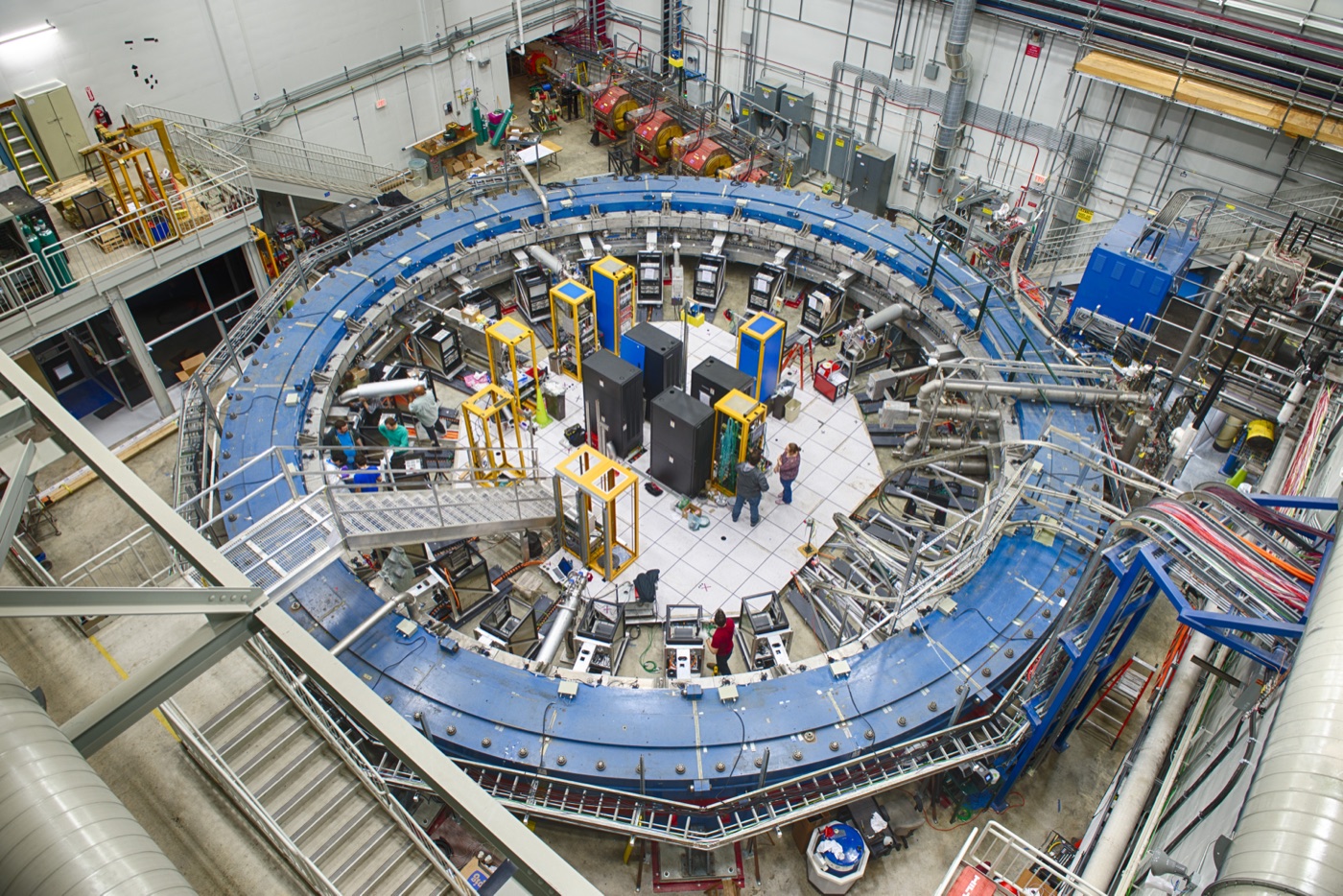
_ring.jpg)
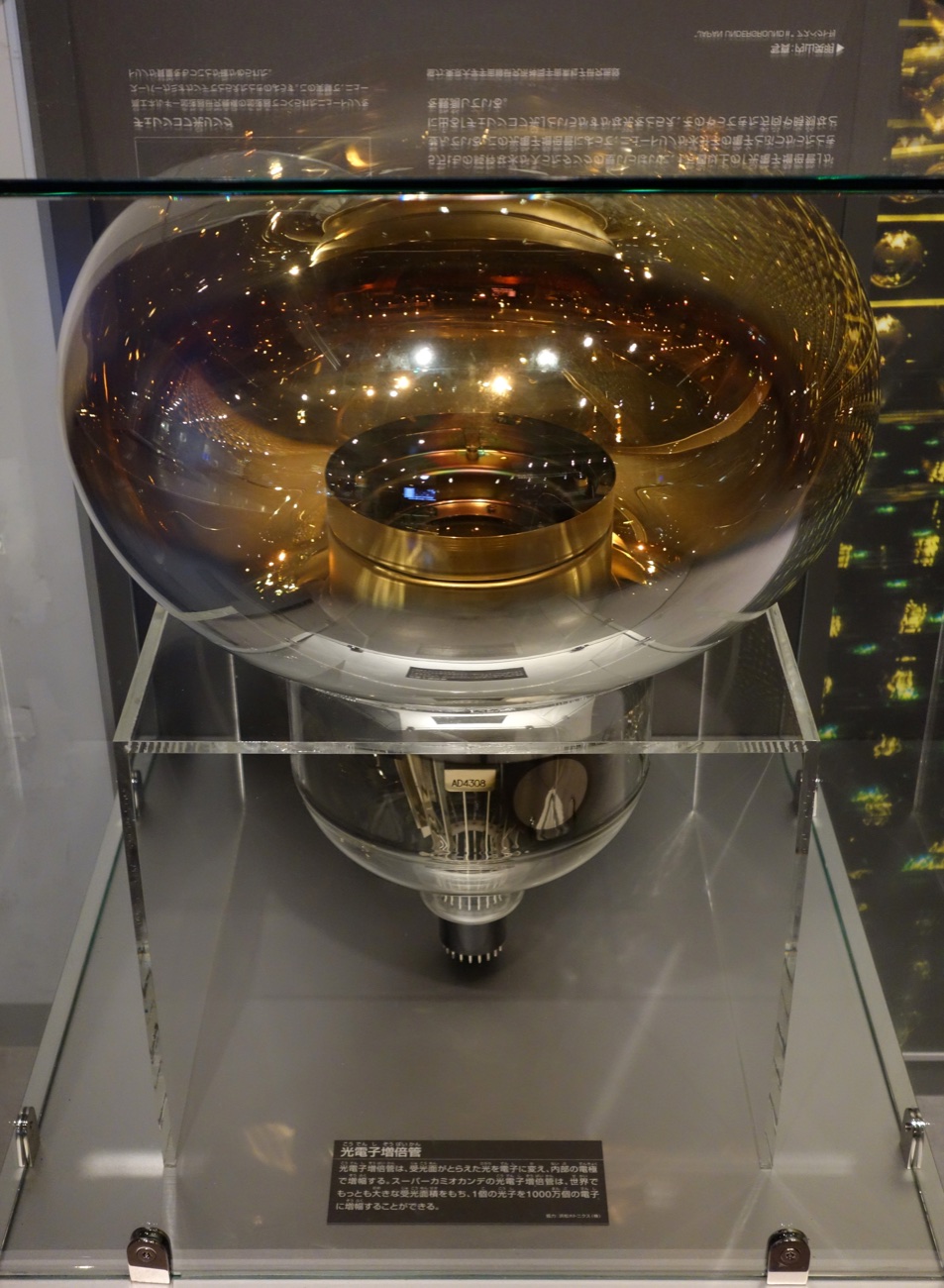

Why include the two that fizzled? Because a page that only ever reports confirmations is marketing. The muon and W-boson stories are the control group — proof that when an anomaly here meets better data or better theory, the honest move is to let it die. That's exactly the standard the speculative claims above (and the DMT stage) have to be held to.
Things this page is NOT relying on: the viral "CERN discovered a parallel intelligent universe" claim (fabricated, no CERN release, no paper, no named researcher); the "Sycamore X cracked the observer effect" blog claim (not from Google, not peer-reviewed); pop-physics YouTube speculation; anything tagged #fblifestyle or "they don't want you to know." If a claim doesn't have a name, an institution, and a paper, treat it as marketing.
How to read this map: claims 1 and 2 are established physics. Claim 3 is pruning theories in real time — good science. Claims 4 and 5 are plausible and actively funded, but not decisive. Claim 6 is the closest thing to a crank magnet in the list — which is exactly why rigorous pre-registered versions (What The Quark, Koch's xenon isotope experiment) matter most.
In real life — The useful part is the careful method: set up a fair test, say your guess up front, and be willing to be wrong.
The big idea — This is what good science looks like. And honestly, this particular test will probably come back "nothing happened."
This is the same framework as the rest of this walkthrough, pushed to its riskiest claim. The "physical world is a rendered interface" idea in Stages 4–6 is the work of cognitive scientist Donald Hoffman (interface theory of perception; "conscious realism"). In a PsyArXiv preprint — "Traces of the Other: Are DMT Entities Real?", Gallimore, Hermansson & Hoffman — the same authors ask whether the beings people report meeting on DMT could be traces of other conscious agents glimpsed through the interface. → osf.io/preprints/psyarxiv/8qvgy
The genuinely good move: instead of arguing about whether the entities are "real," they try to make the question falsifiable — to generate predictions that could come back null. That's the right instinct, and it's the only reason this earns a place next to the real experiments.
Why this still sits in the speculative tier — not the confirmed one. The metaphysics is doing all the work and is basically unsupported. "Perception isn't perfectly veridical" is defensible, with real evolutionary game-theory behind it. "There is a vast space of conscious agents and DMT lets you perceive traces of them" is an enormous further leap, and nothing in the first claim earns the second. That gap is exactly where a skeptic stops.
The strongest reason for skepticism isn't that the predictions might fail — it's that the theory is built so a positive result would be world-shattering while every negative result is explainable away: "the entity didn't cooperate," "the subject wasn't skilled enough," "expectation effects." A theory insulated by its own escape hatches isn't really being tested. Until a protocol is pre-registered with failure conditions the authors agree to in advance, a null result has to actually count against the claim — otherwise this is speculative metaphysics in formal dress, with a good experimental instinct bolted on.
Same standard as the rest of this map. This belongs in the same bucket as the RNG-intention work one stage back (Stage 21): worth watching for how it's tested, not because it's true. And the pure-bullshit version — anyone claiming to "channel" entities or let you talk to them through an app or a chatbot — fails on sight. A model generating spooky text is just a model generating text. Not nonsense. Not science yet.
In real life — No results, and anyone selling an app to "talk to the beings" is faking it — a chatbot making spooky text is just making text.
The big idea — A claim that can wriggle out of every failed test isn't really being tested. The honest bet here is: not real.

The standard question "why is there something?" half-dissolves once you notice that total nothingness would mean zero rules — and zero rules can't even rule out existence. So existence needs no first cause and no creator: there is simply nothing to forbid it. That much holds. What it does not establish is that existence was inevitable.
The honest limit — and the sharp objection. If "nothing" has zero rules, then by the very same logic that no rule forbids existence, no rule forces it either — so nothing-staying-nothing isn't ruled out. The argument earns "existence is permitted, and needs no cause" — not "existence is inevitable." Two subtleties make the objection tighter. First, an empty "universe" sitting alongside others isn't the philosopher's absolute nothing — it's an empty pocket inside a larger something, and absolute nothing has no "outside." Second, "stays nothing" smuggles in time and persistence, which are themselves rules — so under genuinely zero rules, neither "something arises" nor "nothing persists" is even well-defined. Zero rules licenses neither verdict; the most it grants is that existence is allowed.
And one caveat throughout: this is a logical argument, not a physics result. People sometimes point to the restless quantum vacuum as "evidence" that nothing is unstable — but that's a category error. The vacuum is already a something (quantum fields sitting in their lowest state), not the philosopher's nothing. Stage 6 keeps that distinction straight.
"Multiverse" gets used for at least four ideas with wildly different amounts of evidence, and popular talk blurs them into one. Here they are, weakest-to-strongest support. Note up front: every one of them is a something, so none of them answers the question above — a multiverse can't explain why there's anything rather than nothing, because it is anything-rather-than-nothing.
- Level I · beyond the horizon. best-supported — Space almost certainly extends far past the ~46 billion light-years we can see. Go far enough and regions repeat, with the same laws and constants. This is close to a direct consequence of a flat, inflating universe — barely "extra" physics at all. The honest near-mainstream end of the idea.
- Level II · bubble universes. speculative but motivated — Eternal inflation keeps budding off pocket universes, which can freeze in different constants. This is the usual home of "fine-tuning" answers (why our constants look life-friendly: most bubbles aren't, and we can only be in one that is). Physically motivated by inflation, but no direct evidence.
- Level III · many-worlds. an interpretation, not extra evidence — The branches of the wavefunction from Stage 8. Crucial point: this is a re-reading of the quantum mechanics we already have, not a new pile of stuff to discover. It adds no evidence; it reinterprets the same evidence. Mathematically it's actually the simplest reading (no collapse), which is why it's taken seriously — but it stays interpretation.
- Level IV · the mathematical multiverse. pure metaphysics — Tegmark's claim that every self-consistent mathematical structure exists as a universe. Maximally elegant, completely untestable, and indistinguishable from "still just an idea." Belongs in the same bucket as the awareness-first reframe (Stage 5): a clean thought, zero experimental purchase.
The takeaway: only Level I has real empirical wind behind it; II is motivated, III is interpretation, IV is philosophy. When someone says "the multiverse," ask which one — the four are not a package deal, and only the tamest is close to settled.
Part of robustness is knowing when a question is unanswerable in principle, not merely unanswered. Two here may be exactly that:
- "Why these laws?" Any answer bottoms out in one of three places: a deeper law (which just relocates the same question one level down), a brute fact (it just is), or selection — the anthropic move, where we observe life-permitting laws because observers can't arise under the others. Selection explains why we see X without explaining why X exists; it's a filter on observation, not a cause.
- "Why anything at all?" may have no non-circular answer, because any explanation you could give is itself a something — a law, a principle, a structure. You can't ground the existence of all somethings in a something without assuming what you set out to explain.
This isn't defeatism — it's calibration. "Open question" and "unanswerable in principle" are different tags, and honest inquiry tells them apart instead of selling the second as the first.
In real life — Nothing — this one is just a thought, not something you can test or build.
The big idea — If total "nothing" can't even stop things from existing, the universe doesn't need a maker or a starting push. But "no maker needed" isn't "had to happen": existence is allowed, not forced.
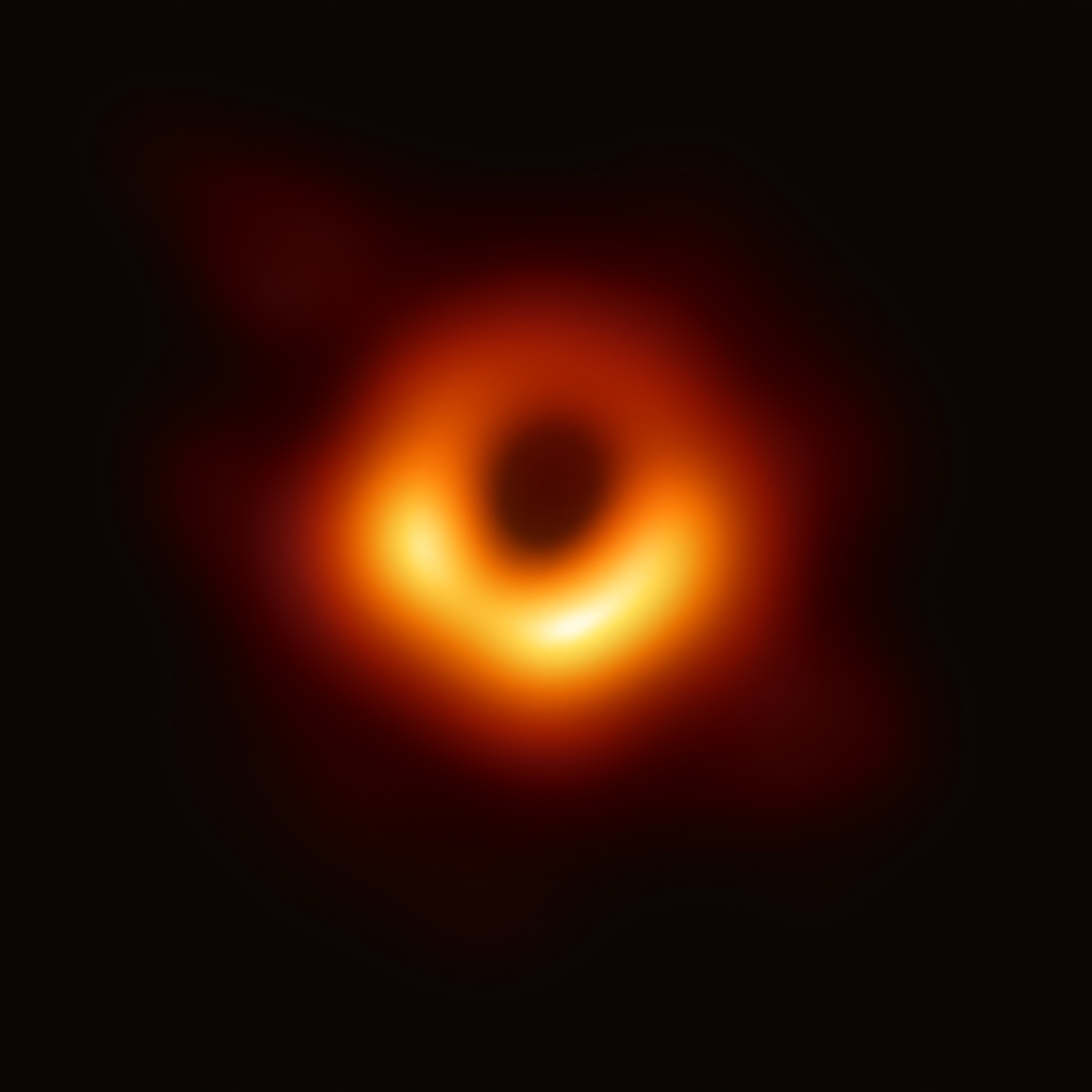

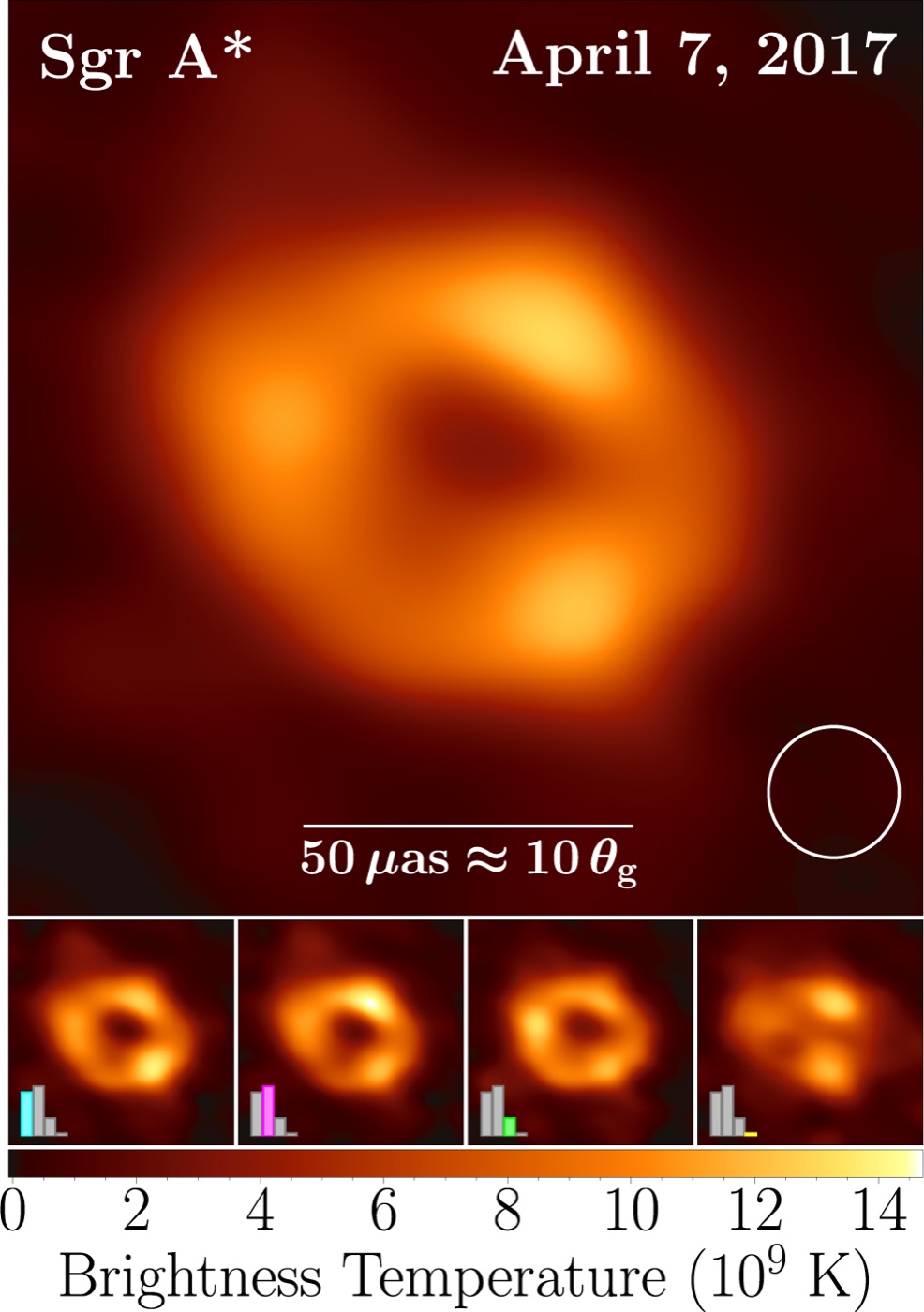

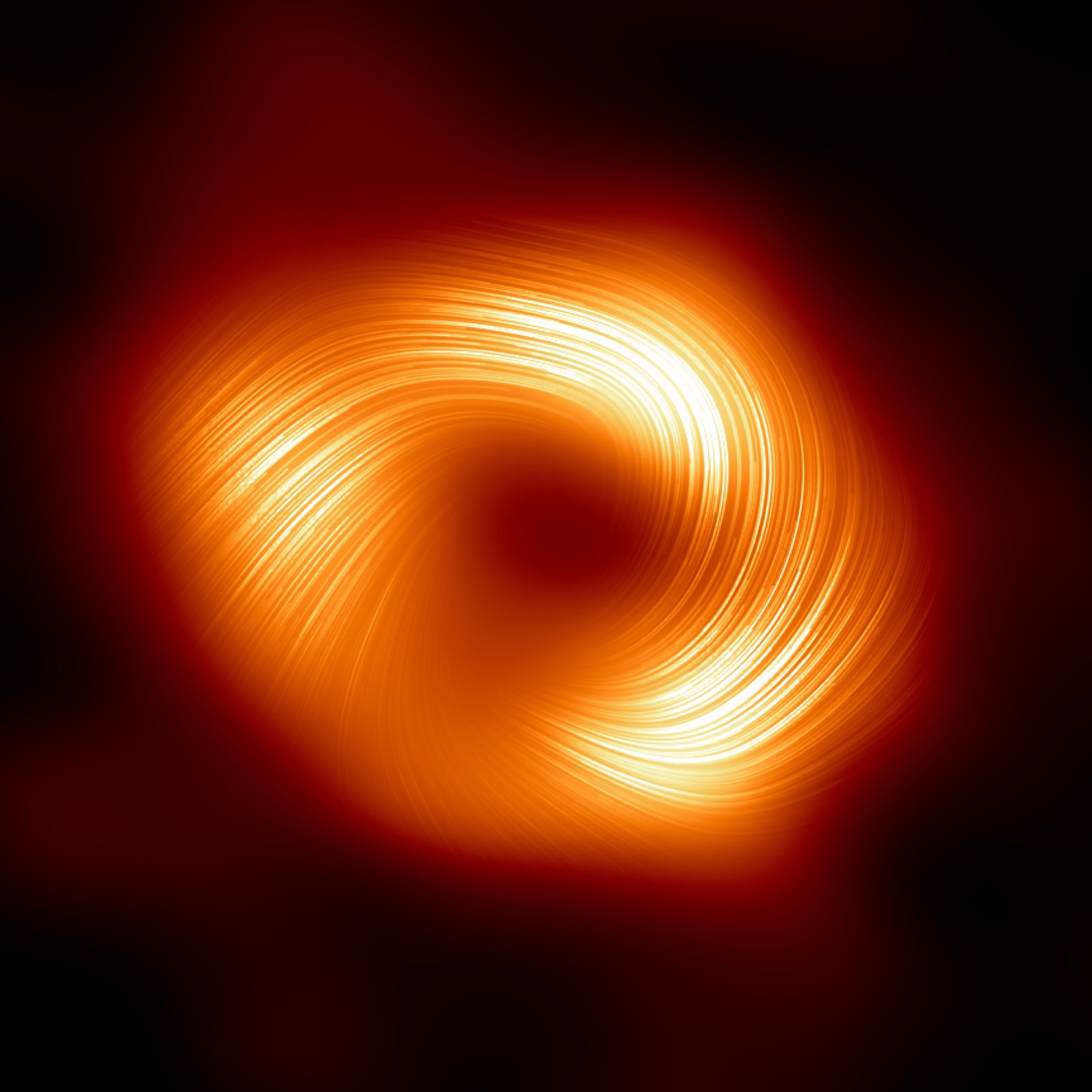
.jpg)
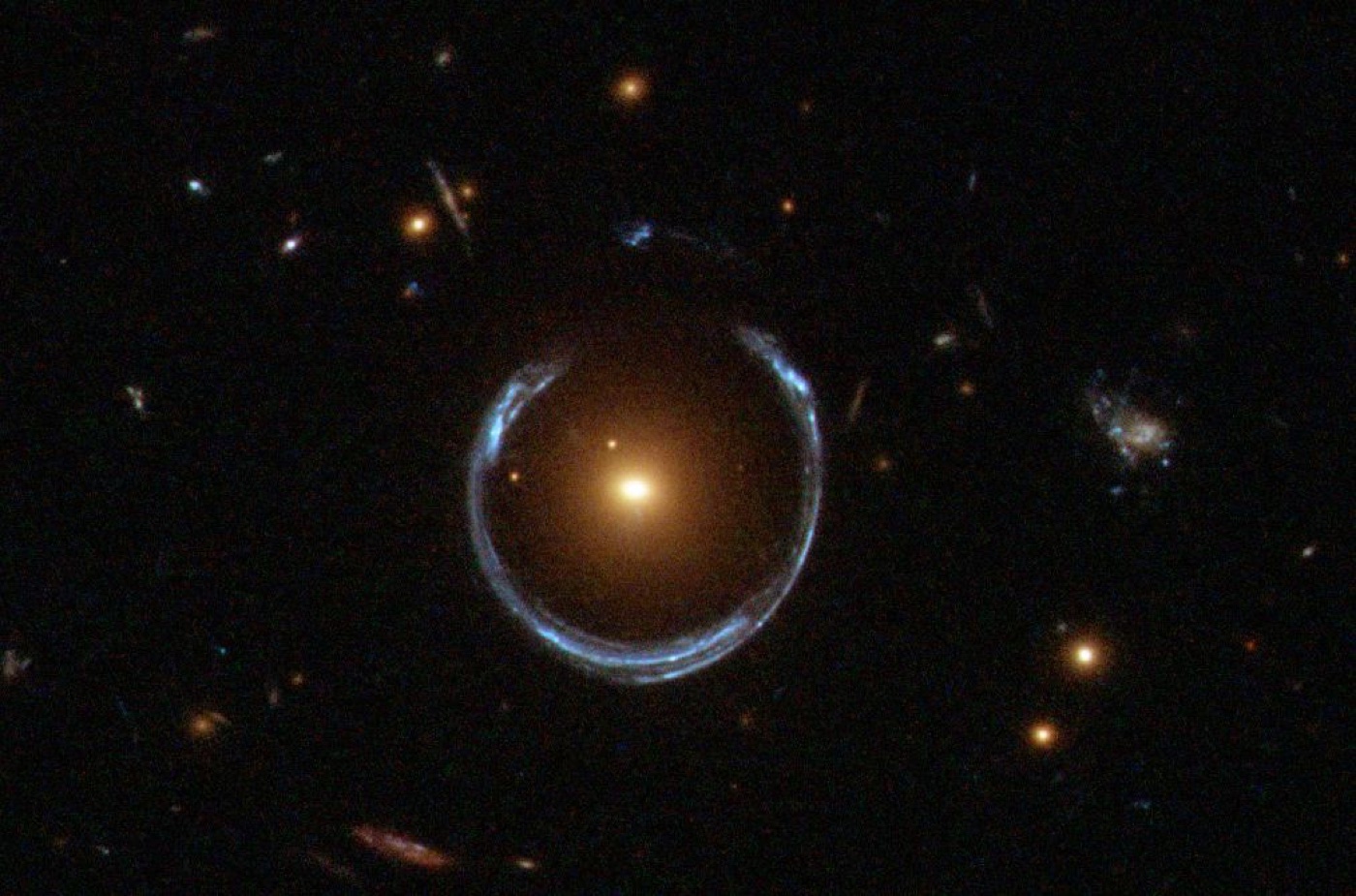


Daryl Janzen (U. of Saskatchewan, September 2025) makes the case cleanly: spacetime is a four-dimensional record of where and when things happen — not a four-dimensional thing that exists. Cars, people and planets exist; events happen. The two are categorically different.
Treating events as if they exist somewhere is what creates the time-travel paradoxes, the eternalism vs. presentism debates, and the urge to ask "what page are we on?" of reality. Drop the confusion and physics loses nothing — every prediction stays. You just stop pretending the map is the place. This dovetails with the rendering picture: spacetime is the screen's coordinate system, not the substance underneath.
What a "dimension" actually is. Strip out the sci-fi. A dimension is just an independent direction of variation — something you need a separate number for. A line needs one number (1D). A sheet of paper needs two (2D). A room needs three (3D). If you want to specify an event — not just where but also when — you need four. That fourth number is time, and the bundle of "where + when" is what physicists call 4D spacetime.
What time is, in physics. Time is not a river flowing past you. In Einstein's special relativity (1905), time is one of the four coordinates of spacetime — but unlike the three spatial ones, moving through space trades against moving through time. Move fast, your clock ticks slower relative to a stationary one. Sit in a gravitational well (general relativity, 1915), your clock ticks slower than a clock far from any mass. There is no universal "now." GPS satellites have to correct for both effects every millisecond or your phone's location would drift by kilometres per day. This is measured and unambiguous.
So in physics, time is: (1) the dimension along which events are ordered, (2) relative to the observer's state of motion and gravitational environment, (3) and — per Janzen and the framework here — not a thing events sit inside, but a feature of the coordinate system we use to catalogue them.
The "problem of time" in quantum gravity. This is a real, famous open problem in physics. When you try to merge general relativity (where time is part of spacetime) with quantum mechanics (where time is a background parameter the wavefunction evolves against), the equation you get — the Wheeler–DeWitt equation (1967) — has no time variable at all. It describes the wavefunction of the whole universe as static. Where did time go?
Several serious proposals, all consistent with the framework above:
- Page–Wootters mechanism (1983, experimentally validated 2013). Time emerges from entanglement between a "clock" subsystem and the rest of the universe. To a being inside, time appears to flow. To the whole, nothing changes. Moreva et al. demonstrated this experimentally with entangled photons in 2013. → arXiv:1310.4691
- Thermal time hypothesis (Connes–Rovelli). Time is an artifact of the statistical state of the system — the direction of increasing entropy. Remove the statistics, time disappears.
- Carlo Rovelli, "The Order of Time" (2018). A readable physicist's summary: time is not fundamental, it's local, and the flow is an artifact of coarse-graining. Loop quantum gravity builds spacetime from discrete relations that are not themselves "in" time.
Are there more than 4 dimensions? Maybe. This is where "speculation" starts, and it should be labeled as such.
- String theory requires 10 dimensions (9 space + 1 time). M-theory, its generalization, requires 11. The extra 6 or 7 are proposed to be compactified — curled up at roughly the Planck scale (~10⁻³⁵ m), far below anything any current experiment can probe. If you stand far enough away, a garden hose looks one-dimensional — even though a close-up shows it has a second dimension going around. Extra dimensions would work the same way.
- Experimental status: no evidence yet. The LHC has searched for signatures of extra dimensions (missing energy from particles leaking into them, micro-black-holes, Kaluza–Klein modes) since 2009. Nothing has been found. That doesn't rule it out — it just puts a lower bound on how small the extra dimensions must be if they exist. As of 2026, string theory remains mathematically beautiful and experimentally unverified.
- The holographic principle (1993, 'tHooft + Susskind; formalized as AdS/CFT, Maldacena 1997). The opposite move: maybe reality has fewer fundamental dimensions than it appears. The idea — born from black-hole thermodynamics — is that all the information in a volume of space can be encoded on its boundary surface. A 3D universe might be fully described by data on a 2D sheet. AdS/CFT is the most-cited paper in theoretical physics and provides a concrete, mathematically-exact example of this equivalence in toy universes. Whether our universe works this way is unresolved.
How it fits the walkthrough. If spacetime is the rendered screen (Stage 7) and not the substrate (Stage 6), then:
- "3 space + 1 time" is the resolution of our screen, not a property of the underlying information layer.
- Time's flow is something that exists for observers inside — Page-Wootters, thermal time, and Janzen's "events happen" all point the same way.
- Extra dimensions (if real) and holography (if right) would both be different ways of saying the screen's dimensionality is a feature of the rendering, not of the code.
- The entanglement result in Stage 9 — "distance is rendered, not fundamental" — is the strongest experimental hint in this direction that exists today.
Honest status check. Relativity is settled, tested, and shipped in every GPS chip. The "problem of time" in quantum gravity is a real open problem. Page-Wootters has an experimental demonstration. String theory's extra dimensions have zero experimental support so far. The holographic principle is mathematically established in toy models; whether our universe is holographic is unresolved. None of this page is betting on unverified claims — it's just showing where the honest frontier sits.
In real life — This is in your pocket — GPS only works because we know time bends.
The big idea — Space and time might just be a way of labelling where and when things happen — like a calendar — not a real container. There's no single "now" for everyone.
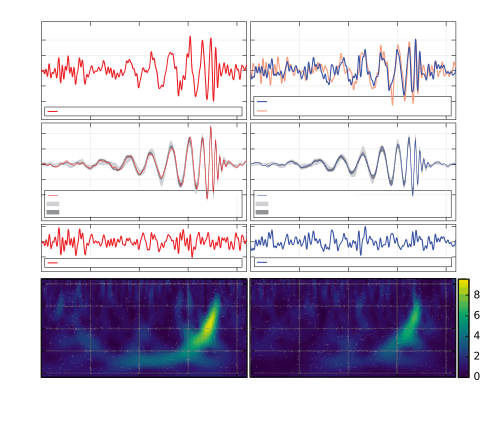

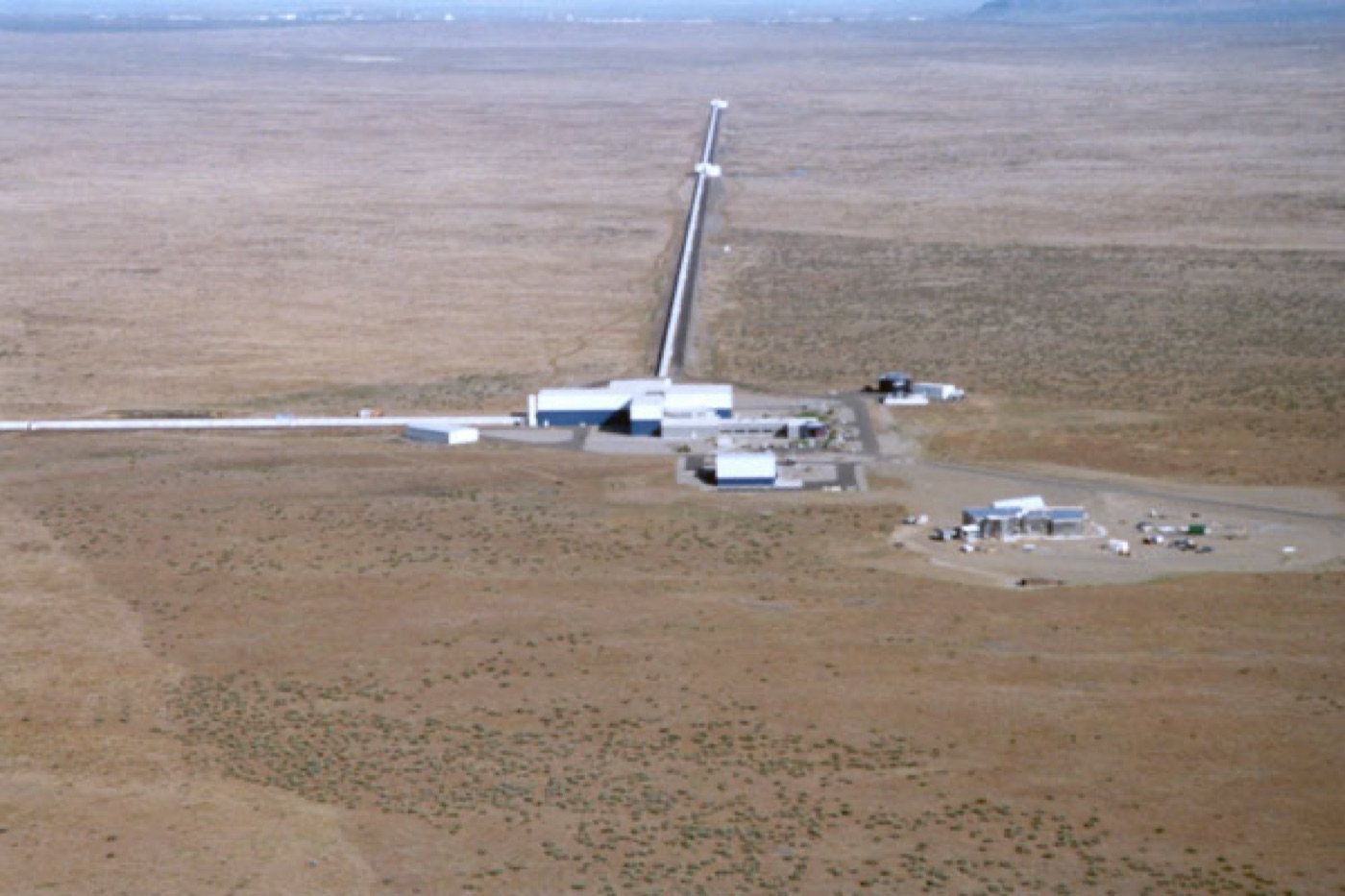

Gravitational waves: predicted 1916, directly detected 2015. Einstein's general relativity says mass-energy curves spacetime — and when masses accelerate violently, that curvature radiates outward as waves. For a century they were too faint to catch. Then on 14 September 2015 the twin LIGO detectors in the US recorded GW150914: the merger of two black holes (~29 and ~36 solar masses) about 1.3 billion light-years away. The passing wave changed LIGO's 4-kilometre arms by about 10⁻¹⁸ m — roughly one-thousandth the width of a proton — and the signal in the two detectors matched the predicted waveform almost perfectly. Weiss, Barish and Thorne received the 2017 Nobel Prize. → LIGO/Virgo, "Observation of Gravitational Waves from a Binary Black Hole Merger," Phys. Rev. Lett. 116, 061102 (2016)
It's now a working observatory, not a one-off. In 2017, GW170817 caught two neutron stars merging — and telescopes worldwide saw the same event in gamma rays and visible light, confirming gravitational waves travel at light-speed and launching "multi-messenger astronomy." LIGO–Virgo–KAGRA have since logged hundreds of mergers. In 2023, pulsar-timing arrays (NANOGrav and partners) found evidence for a low-frequency gravitational-wave background — a cosmological hum picked up across the galaxy's pulsars. The sky now has a soundtrack we can record.
How it fits the walkthrough. Even read as a coordinate-map (Stage 14), the geometry that map describes is dynamical — it can carry energy and ring like a bell. That's not in tension with "spacetime is a record": the record has structure that genuinely propagates. Relativity passed its most extreme test yet, and the rendering picture loses nothing.
Every other fundamental force is carried by a particle: electromagnetism by the photon, the strong force by gluons, the weak force by W and Z bosons — all experimentally confirmed. If gravity is quantum in the same way, it should have its own carrier: the graviton (massless, spin-2). Here is the honest status, since the user asked for experiments with results:
- No graviton has ever been detected, and it may be nearly impossible. Freeman Dyson argued that catching a single graviton could require a detector so massive it would collapse into a black hole. Gravitational waves (above) are real and detected; a single quantum of gravity is a different, far harder target — and so far, untouched.
- Quantizing gravity naively fails. The maths that works beautifully for the other forces produces nonsense (non-renormalizable infinities) when applied to gravity. This is the core unsolved problem of theoretical physics.
- Candidate theories exist but are unverified. String theory automatically contains a spin-2 graviton; loop quantum gravity quantizes geometry itself. Both are mathematically serious and experimentally unconfirmed as of 2026 — exactly the "still just an idea" bucket this walkthrough is careful to label (Stage 14 covers the surrounding "problem of time").
The clean line. Gravitational waves = proven, Nobel-winning, now routine observational science. The graviton = a well-motivated prediction with zero direct evidence. Keeping those two apart is the whole point of this stage — the ripple is real; the particle is a hypothesis.
In real life — We can now "hear" giant crashes across the universe, like black holes smashing together. (The "graviton" particle is only an idea — never found.)
The big idea — Even if space is like a map, it can still shake and ripple. The graviton is where honest scientists simply say "we don't know yet."
If consciousness is the default state of the potential (Stage 18), then the question isn't "how does the brain produce it" — it's "what makes it stop being everything at once." The answer might be subtraction. A body, a nervous system, memory: each layer removes degrees of freedom until the potential has no choice but to be someone specific. On this picture you are, quite literally, reality reorganized into a configuration that observes itself — though note the word to resist is "just": "just reorganized matter" quietly asserts the hard problem is solved, which Stage 18 says nobody has shown.
Two senses of "reality observing itself" — keep them apart. The metaphysical sense (you are a local region where reality folds back and takes a reading of itself) is defensible and compatible even with plain neuroscience. The participatory-physics sense (that the act of observing does physical work — nudges outcomes, collapses wavefunctions) is a separate, much stronger claim — and Stage 17's verdict bets it null: decoherence shows a thermostat collapses a wavefunction as well as a physicist does. This stage lives entirely in the first sense.
Memory is the mechanism that holds you together. Every morning you wake up and unconsciously perform an act of creation by remembering who you are and forgetting what you really are. Deep sleep, anesthesia, death — those are the moments the forgetting relaxes. You don't disappear. You just stop being narrowed.
In real life — Sleep and memory science are solid; the "you become you by forgetting" story is just an idea, not something you can test.
The big idea — Maybe being "you" is a narrow focus on something bigger — so birth and death are changes of focus, not a switch flipping on and off. A lovely idea, but only an idea.
This is the practical stage. For each major claim: (1) what it means if true, (2) what it would unlock, (3) how to prove it further, and (4) what already points toward it — or away from it. No hand-waving. Labeled speculation where speculation exists.
If true (and lattice-QCD mass calculations already show it — Stage 13): the mass of everything around you is overwhelmingly field and binding energy, not the stuff of the particles inside it. "Empty space" isn't a background — it's the engine.
What it unlocks:
- Vacuum energy extraction — already tested in principle via the dynamical Casimir effect (Wilson et al., Nature 2011), where photons were pulled out of the vacuum by rapidly modulating a mirror-like boundary (a SQUID circuit, not a literal moving mirror). Tiny, but real. A scalable version would be a genuinely new energy source. Highly speculative in engineering terms.
- New propulsion concepts — NASA's Eagleworks lab has published tests of "quantum vacuum thrusters" that later failed independent replication. Results so far: null or inconclusive. Worth watching, not worth believing yet.
- Better fundamental-constants calculations — understanding how mass emerges from the vacuum is the last missing piece of the standard model. A clean theory here would reshape particle physics.
How to prove it further: replicate STAR's spin-correlation measurement in higher-energy collisions and with different particle species; directly measure vacuum energy density in a lab smaller than the observable universe (the cosmological constant problem — the worst prediction in physics, off by 10¹²⁰).
Already pointing this way: Casimir effect (measured 1997), Lamb shift, electron magnetic moment to ~12 significant figures, Hawking radiation (indirect), STAR 2026 (quark-spin correlations surviving confinement). Pointing against: nothing decisive, but the cosmological constant mismatch is a genuine unsolved problem.
If true (and it is — 2022 Nobel): the universe is not a collection of independent objects in separate places. Distance is how certain relationships appear, not what they fundamentally are.
What it unlocks — already happening:
- Quantum cryptography (QKD). Shipping product. China's Micius satellite has done entanglement-based key distribution over 1,200 km (Yin et al., Science 2017). Commercial QKD networks exist in Vienna, Tokyo, Beijing.
- Quantum computing. Every superconducting, ion-trap and photonic quantum computer on earth exploits entanglement as its core resource. IBM, Google, IonQ, Quantinuum — all of this is nonlocality monetized.
- Quantum teleportation of states. Demonstrated between photons across 143 km (Canary Islands, Zeilinger 2012) and between macroscopic objects (Furusawa). Not Star Trek — you're transmitting a quantum state, not matter. But the state really does arrive.
- Quantum sensing. Atomic clocks, magnetometers, and gravimeters orders of magnitude more sensitive than classical equivalents — already deployed in navigation, mineral surveys, and medical imaging (MEG, MRI).
Already pointing this way: every loophole-free Bell test since 2015; Micius; the cosmic Bell test closing the freedom-of-choice loophole back ~12 billion years. Pointing against: nothing at this point. The debate now is what nonlocality means, not whether it exists.
If true: space, time, and possibly dimensionality itself emerge from a deeper, non-spatial layer. This is the direction quantum gravity has been heading for 30 years.
What it unlocks:
- A working theory of quantum gravity. The single biggest open problem in physics. A correct theory would let us understand the inside of black holes, the first 10⁻⁴³ seconds after the Big Bang, and possibly the nature of dark energy.
- Information-theoretic engineering of physical law. If spacetime is emergent from information, then understanding the code may let us design with it — ultra-dense computing, novel materials, entirely new substrates. None of this exists yet. Flag as: speculative.
- Resolution of the black hole information paradox. Already partially resolved (Penington, Almheiri, Maldacena et al., 2019–2020) using holographic entanglement-entropy calculations — a huge hint that the holographic picture is more than metaphor.
How to prove it further: experimental signatures of emergent spacetime are hard. Proposed tests include precision interferometers looking for Planck-scale noise (Fermilab's Holometer, null result so far), gravitational-wave observations probing the earliest moments of the universe (LISA, late 2030s), and table-top tests of gravity's quantum nature (Bose–Marletto–Vedral proposal, experiments currently in development at UCL and Vienna).
Already pointing this way: AdS/CFT (Maldacena 1997 — most-cited paper in theoretical physics), the Page–Wootters experimental demonstration (2013), black-hole entropy scales with surface area not volume, the firewall/ER=EPR discussions. Pointing against: LHC has found no extra dimensions. The Holometer found no Planck-scale noise. String theory remains untestable at current energies. These are genuine setbacks.
The computational route to the same conclusion (Wolfram) — no consciousness required. There's a second way to reach "spacetime is emergent" that needs no observer-first or awareness-first move at all. The robust part (settled computer science, not controversial): simple rules can generate unlimited complexity — Wolfram's Rule 30 cellular automaton produces output so irreducible it shipped for years as a randomness generator in Mathematica — and computational irreducibility means some systems have no shortcut: to know the outcome you must run every step. That alone is a clean, non-mystical reason a fully lawful universe can still look open and unpredictable. The speculative part (still just an idea): the Wolfram Physics Project (Wolfram & Gorard, 2020) proposes the universe is a hypergraph rewritten by one simple rule, with space, time, relativity, and quantum "branchial space" all emerging from it. Its sharpest math (Gorard) recovers the Einstein field equations of general relativity in the large-scale limit — reading the dimension and curvature off how the number of nodes within r connection-hops grows (the Bertrand–Diquet–Puiseux ball-volume expansion) — plus special relativity from "causal invariance." But these are consistency results (the model can reproduce known physics), not novel confirmed predictions — so it's mathematically serious yet unconfirmed, light on unique falsifiable predictions, and not mainstream-accepted as of 2026 — the same tier as the awareness-first reframe, arriving from the opposite direction. Its value here is precisely the contrast: you can dethrone "stuff" as fundamental using pure computation and zero consciousness.
If true: we can — for the first time — objectively measure whether something is conscious and, eventually, how much.
What it unlocks:
- Medical: coma and anesthesia. Already partially working. The Perturbational Complexity Index (Casali et al., Science Translational Medicine 2013) distinguishes conscious vs. unconscious states in patients with ~90% accuracy using TMS + EEG. It's being deployed clinically to detect covert consciousness in unresponsive patients.
- Ethics of AI. If we have a measurable consciousness signature, we can say — not guess — whether a model has any. This would end decades of circular argument and would matter enormously as AI systems grow.
- Animal welfare and medical research. Quantitative consciousness measurements would reshape which interventions are considered humane.
How to prove it further: the Cogitate adversarial-collaboration model (Nature 2025) is the template — pre-register competing theories' predictions, run identical experiments, let the data decide. Extend to more theories (higher-order, attention-schema, recurrent processing, etc.) and to non-human subjects.
Already pointing this way: Perturbational Complexity Index works; Cogitate ruled out strong versions of both IIT and GNWT but validated parts of each; split-brain, blindsight, and anesthesia studies all find consistent neural correlates. Pointing against: no theory has yet survived adversarial testing intact, which means we do not yet have the signature — we have fragments of it.
If true: the brain is not a classical computer made of neurons — it's a hybrid system where quantum coherence plays a functional role. This would be the deepest reframing of neuroscience since the discovery of the neuron.
What it unlocks:
- Post-classical AI. If consciousness requires quantum processes, current AI (purely classical) would be architecturally limited. A quantum-classical hybrid would be required — an entirely new machine-learning substrate.
- New psychiatric interventions. Anesthetics already appear to target microtubules — a quantum picture would explain why specific isotopes have different behavioral effects despite identical chemistry, and open new therapeutic targets.
- Neuromorphic computing. Room-temperature quantum effects in biology (tryptophan superradiance, 2024) suggest biomimetic quantum computers may be possible at ordinary temperatures — currently quantum hardware needs near-absolute-zero cooling.
How to prove it further: the xenon-isotope experiment (Koch, Neven et al., Entropy 2024) is the cleanest test. Different xenon isotopes have identical chemistry but different nuclear spin. Any difference in their anesthetic potency implicates spin-level — i.e. quantum — processes. The experiment is proposed in fruit flies and cerebral organoids.
Already pointing this way: tryptophan superradiance reported, with supporting measurements (Babcock et al. 2024), anesthetic studies targeting microtubules, photosynthesis transfers captured light with striking efficiency — though the original "quantum coherence" reading (Fleming group, 2007) has since been partly reinterpreted as ordinary molecular vibration (the honest status in Stage 24); bird navigation appears to use radical-pair quantum effects (strong evidence, leading hypothesis — not yet definitive). Pointing against: Tegmark's decoherence-timescale objection has not been fully answered. No experiment has yet produced a unique prediction that only Orch-OR (or any specific quantum-brain model) can explain.
If true: the observer in quantum mechanics is not incidental. Directed, measured awareness could become a physical tool — not magic, engineering.
What it unlocks:
- Consciousness as instrument. If measured awareness produces even tiny, reliable physical effects, it can be amplified, engineered, and used — the way we turned the electron's charge into electronics.
- Direct brain-world interfaces that don't require mechanical mediation.
- Medical: placebo as a quantified mechanism. The placebo effect is already measurable and reliable. A framework where attention directly affects physical outcomes would turn placebo from an annoyance into a technology.
How to prove it further: the AI + QRNG feedback experiment (Stage 21). A pure AI observer can run millions of observations per second with perfect consistency — statistical power no human meditator can provide. If observation physically biases randomness, an AI in a feedback loop with a quantum RNG should show it. If not, the claim is dead.
Already pointing this way: very little rigorously. The Bösch 2006 meta-analysis finds a tiny non-zero effect but can't exclude publication bias. Pointing against: the Maier 2018 Bayesian re-analysis finds evidence against the effect. Pre-registered QRNG replications have generally failed. This is the weakest-supported claim on the entire page. It's included because (a) it's the easiest to test, and (b) negative results are as informative as positive ones.
Honest bottom line on this one: if this claim turns out to be wrong, nothing else on the page falls. Claims 1–4 survive even if claims 5 and 6 are false.
Three practical takeaways:
- Update the default mental model. Even the already-confirmed parts (nonlocality, the active vacuum, mass from field interactions, time being relative) are enough to retire the "lonely particles floating in empty space" picture most people walk around with. This alone changes how you think about consciousness, identity, and death — not mystically, just accurately.
- Track the pending experiments. The xenon-isotope test, the next Cogitate round, and the pre-registered QRNG experiments will each produce results in the next few years. Each one is a concrete yes/no that settles a piece of the picture.
- Distinguish the confirmed from the speculative every time. The biggest failure mode is taking an inspiring idea and treating it as settled. This page tries to keep those separate everywhere. Apply the same filter to everything you read elsewhere — name, institution, paper, or it's marketing.
In real life — The real payoff is better tools — faster computers, sharper sensors — not magic.
The big idea — The universe is far weirder than it looks, but it still has firm rules. "Weird" never means "anything is possible."
This is the "no fluff" stage. The previous stage listed what becomes possible if each claim is right. This stage answers the next question: does it scale, does it require impossible amounts of energy, and what are the hard limits nothing on the list can break.
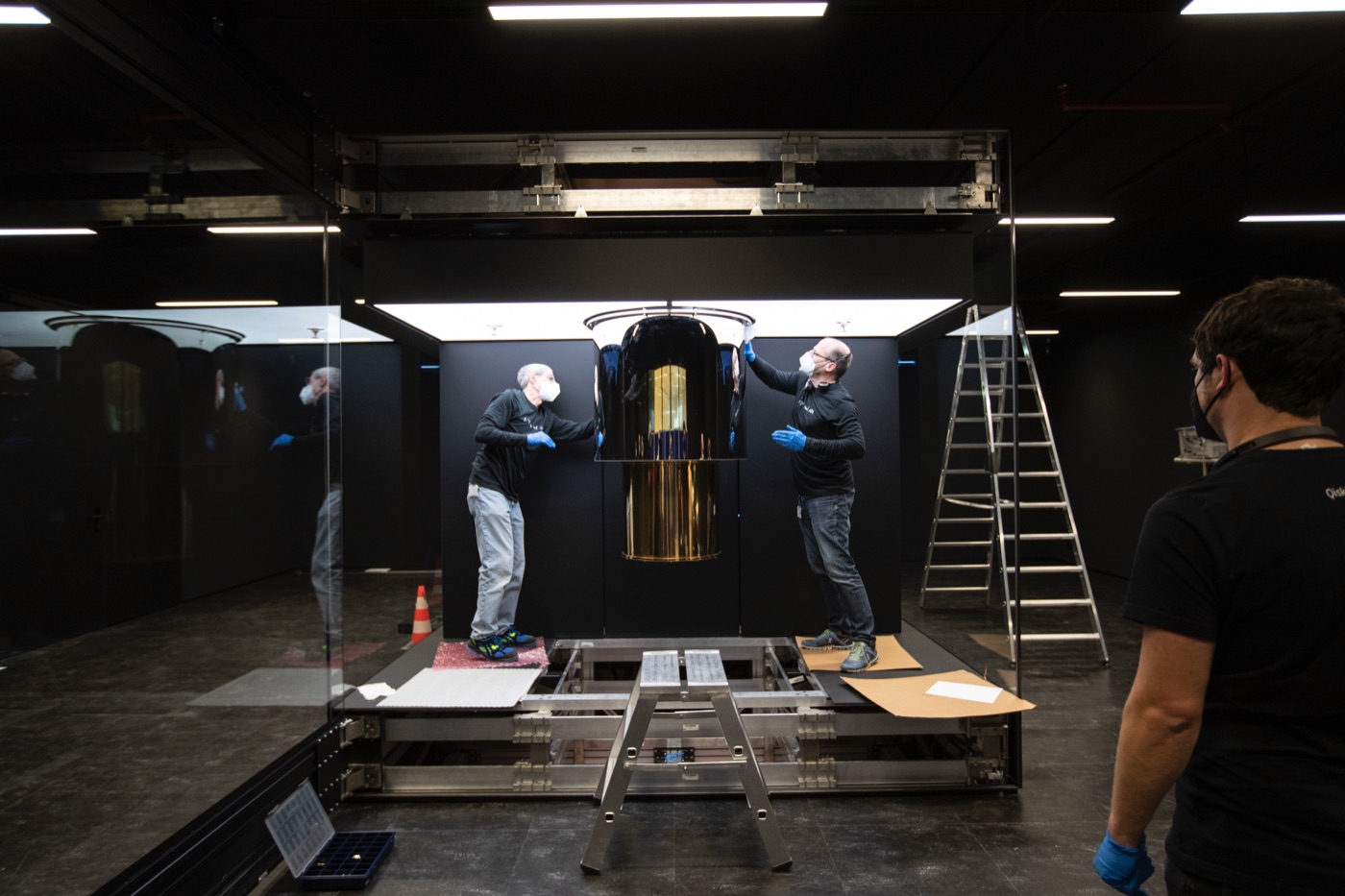
_installation.jpg)
These aren't promises. These are products. If nothing new is discovered, this tier alone is a multi-hundred-billion-dollar industry over the next two decades.
- Quantum computers. IBM's Condor (2023) hit 1,121 qubits. Heron (2024) improved error rates 5×. Google's Willow (2024) demonstrated exponential error suppression — the first time adding qubits reduced error rather than increased it. Scaling is now an engineering curve, not a physics mystery. Expected: fault-tolerant machines with ~10⁶ physical qubits in the early 2030s, capable of breaking RSA and simulating chemistry no classical machine can touch. → Google Quantum AI / Willow
- Quantum key distribution (QKD). Commercial product since 2003 (id Quantique, MagiQ). China's Micius satellite: 1,200 km entanglement-based key exchange. The Beijing–Shanghai quantum backbone: 2,000 km fiber. South Korea expanded commercial QKD and adopted a national QKD standard in 2024. Scalable, shipping, profitable.
- Quantum sensors. Optically-pumped magnetometers (OPM) are progressively replacing SQUID-based MEG, with commercial systems maturing in the early 2020s — room-temperature, wearable, 1000× cheaper, same sensitivity. Atomic clocks are already inside GPS, 5G base stations, and financial trading infrastructure. Nitrogen-vacancy diamond sensors are shipping for biomedical imaging at single-cell resolution.
- Quantum gravimeters. Muquans (France) sells atom-interferometry gravimeters to oil, mining, and civil engineering. 10× more sensitive than classical gravimeters. Being deployed for underground imaging.
Scale limits: these all scale the normal way — manufacturing, cost curves, integration. No fundamental blocker. This tier is the safe bet.
- Clinical consciousness detection. The Perturbational Complexity Index (Casali et al. 2013) already distinguishes conscious from unconscious states in humans at ~90% accuracy. Being deployed in ICUs for detecting covert consciousness in unresponsive patients. Scale path: make it cheaper and portable. No physics blocker.
- Quantum-biological solar cells. Photosynthetic complexes funnel captured light to the reaction centre with strikingly high transfer efficiency at room temperature — though whether long-lived quantum coherence plays a functional role is genuinely debated (early claims of room-temperature coherence in the FMO complex have been partly reinterpreted as ordinary molecular vibration). Groups at MIT, Cambridge, and Berkeley are building biomimetic light-harvesting complexes. If any of them works at manufacturable scale, this is a category-defining technology.
- Quantum magnetometers for brain imaging. Sub-millimeter resolution of brain activity in a wearable form factor. Already working in labs (Cerca Magnetics, QuSpin). Commercial rollout has started.
- Precision clocks as dark-matter detectors. Atomic clock networks (JILA, NIST) are sensitive enough that dark-matter fields passing through earth should perturb them. Experiments are running now.
- Xenon-isotope anesthesia tests (Koch/Neven). If the result is positive, quantum-aware drug design becomes a real discipline. Same molecule, different isotopes, different effects — a whole new axis for therapeutics.
Scale limits: mostly integration and manufacturing. Some (quantum solar) require materials science breakthroughs. None require new physics.
- Post-classical AI (quantum-classical hybrid). Current AI is 100% classical. If brains use quantum coherence functionally (the quantum-brain claim, Stage 23), matching human cognitive efficiency may require hybrid architectures. Quantum machine learning is a real research area (Google, IBM, Xanadu), but whether it's needed for AGI is unknown. Not scalable today — depends on unresolved physics.
- Brain–quantum-computer interfaces. Proposed by Koch/Neven. Koch's own quote: "it's total science fiction right now." Requires quantum coherence between two radically different substrates (biological microtubules and superconducting qubits) that have never been shown to interact. Decades out, if possible at all.
- Room-temperature biomimetic quantum processors. Tryptophan superradiance (2024) suggests biology manages it. Replicating it in a controllable device is the open problem. If solved, removes the near-absolute-zero cooling requirement from quantum computing — a massive cost and scaling unlock.
- Consciousness-as-instrument (AI+QRNG). Even the strongest version, if the effect exists, would produce drift of ~10⁻³ to 10⁻⁵. Useful for: nothing at that scale yet. Interesting for: whether the framework is testable at all.
Scale limits: these depend on physics we don't yet have. They might be possible; they might not. Treat any specific timeline claim as marketing.
This is the most important section, because it's where sci-fi gets reality wrong. None of the claims on this page break these limits. If someone tells you otherwise, they're selling something.
- Faster-than-light communication via entanglement. Forbidden, by the no-signaling theorem. Measurement outcomes at one end of an entangled pair are random — you can't control them. You only see the correlation after you compare results via a classical (sub-light) channel. Entanglement is real, instant, and useless for sending signals. Every "quantum internet" concept relies on classical channels to complete the transmission.
- Free energy from the vacuum. Almost certainly forbidden. The vacuum has energy, yes. You can even extract photons from it (the dynamical Casimir effect — Wilson et al., Nature 2011, experimentally confirmed). But you have to put in more energy than you get out — the modulated boundary that creates the photons costs more energy than the photons carry. This isn't a ban on extraction; it's a ban on net extraction. Thermodynamics still applies to the vacuum. The "zero-point energy machine" is a fraud every time it's pitched.
- The cosmological constant problem. Theoretical vacuum energy density is ~10¹²⁰ times larger than observed. This is the biggest mismatch in physics. Whatever is going on, it means you cannot naively "tap" vacuum energy — you'd be tapping something the universe itself is somehow hiding.
- Warp drives / Alcubierre. Mathematically consistent with general relativity — but requires negative energy density on macroscopic scales, which has never been produced and may be fundamentally impossible. Recent work (Lentz 2021, Bobrick & Martire 2021) has proposed positive-energy variants; still require energies comparable to the mass of Jupiter. Not practical in any timeline anyone honest will give you.
- Time travel to the past. No credible mechanism. Closed timelike curves are allowed in some solutions of general relativity but require either rotating black holes at extreme density, traversable wormholes (which need negative energy), or infinite cylinders. None exist.
- Mind reading other minds or accessing others' experiences directly. Nothing on this page supports this. Entanglement produces correlations, not shared content.
The "infinite energy" question directly: No. Even if every claim on this page is correct, you do not get free energy, you do not get FTL communication, and you do not get to cheat thermodynamics. What you get is: radically better efficiency (quantum computing, quantum sensing, biomimetic solar), entirely new measurement capabilities (consciousness detection, dark-matter clocks), and a better theoretical picture of what the universe actually is. That's plenty. Anyone claiming more is running a scam.
Is any of this scalable? Yes — Tier 1 is scaling now, and the scaling is exponential in the way that electronics was in the 1960s. Quantum computing, QKD, and quantum sensing are no longer speculative; they are in the same phase as transistors in ~1960. Wait 20 years and quantum tech will be ordinary infrastructure.
Does it require infinite energy? No, and the framework specifically rules that out. The vacuum is active, but thermodynamics still applies to it. What the framework unlocks is efficiency, not free energy.
What could actually be built?
- Near term (now – 2035): fault-tolerant quantum computers, global QKD networks, wearable quantum brain-imaging, quantum gravimeters for underground mapping, clinical consciousness detectors, precision dark-matter-searching clock networks.
- Medium term (2035 – 2055): biomimetic quantum solar cells, quantum-aware pharmacology, AI architectures informed by quantum-biology research, drug classes designed around isotopic-nuclear-spin effects.
- Long term (if the deeper claims hold): room-temperature quantum hardware, hybrid quantum-classical AI, and — possibly — a working theory of quantum gravity that reshapes propulsion, computing, and cosmology in ways no one alive today can fully imagine.
- Never, regardless: FTL, free energy, time travel, thought transmission. These are not underdeveloped — they are forbidden by the same laws this framework takes seriously.
The biggest trap in this space is confusing "the universe is stranger than we thought" with "anything goes." The universe is stranger than the default view — and it has rules that don't bend. Tier 4 doesn't move even if every claim in Tiers 1–3 is verified. That's a feature, not a bug.
In real life — Quantum computers and sensors are scaling up now; but faster-than-light travel, free energy and time travel stay impossible no matter what.
The big idea — You can be amazed by reality and still respect its hard limits. The same rules that make it wonderful are the ones that don't bend.
Short answer: yes, in specific and measured ways — and no, not in the way cranks claim. Information is physical (Landauer). Measurement is an interaction, not a passive read. That means how you process information literally changes what the physical system does. Here's what's real, what's shipping, and what's forbidden.
- Quantum Zeno effect. Itano 1990, Patil 2015: repeated measurement literally freezes a quantum system's evolution. Pure information extraction → altered dynamics.
- Maxwell's-demon engines. Toyabe 2010, Koski 2014, Cottet 2017 converted information alone into extractable work, approaching the Landauer bound.
- Quantum error correction. Google Willow 2024: adding more physical qubits made the logical qubit more stable. Information processing actively protecting a physical state.
- Delayed-choice experiments. Kim 2000, Ma 2012: which information you keep or erase determines which interference pattern appears. Not retrocausal — but information structure decides the physics.
- Feedback cooling. LIGO mirrors, trapped ions, optomechanical resonators are routinely cooled near their quantum ground state by measure-and-correct loops.
- Measurement-based quantum computing (MBQC). Computation is a sequence of measurements on an entangled cluster state. Already demonstrated; Raussendorf-Briegel model is a live hardware path.
- Zeno-stabilized qubits and sensors. Extend coherence by measuring cleverly — turns decoherence into a controllable parameter.
- Information-engine nanodevices. Molecular sorting, single-molecule cooling, sub-kT refrigeration driven by feedback on measurement results.
- Fault-tolerant quantum memory. QEC codes (surface, color, LDPC) turn raw, fragile qubits into stable logical ones purely by how information is structured.
- Adaptive optical/atomic clocks. Real-time feedback already pushes clocks to 10⁻¹⁹ fractional stability — sensitive enough to probe general relativity at centimeter scales and hunt dark matter.
- Reservoir engineering. Instead of fighting the environment, measure-and-steer it so it drives the system into the state you want. Used today in trapped ions and superconducting circuits.
- No faster-than-light signaling. Entanglement gives correlations, never transmitted content. No-signaling theorem is airtight.
- No free energy. Every bit of work extracted by a Maxwell demon is paid for, in full, when the demon's memory is eventually erased. Landauer is a floor, not a loophole.
- No mind-over-matter at macro scale. The PEAR lab ran for 28 years trying to detect intention affecting random-number generators. Meta-analyses showed no replicable effect. Claims otherwise are noise-mining.
- No rewriting the past. Delayed-choice experiments don't change history — they change which history was consistent with the final measurement. Subtle but critical distinction.
- No "consciousness collapses the wavefunction." Decoherence does, and a thermostat counts as an observer. Human awareness is not required and has never been shown to matter.
The honest headline: information processing is a lever on physical reality — a real one, being pulled right now, in labs and shipping products. But the lever has a fulcrum made of thermodynamics and relativity, and those don't move. Everything genuinely useful in this area lives inside those limits. Everything outside them is, without exception, a scam or a misunderstanding.
In real life — Just handling information can already move real things — cool down mirrors, freeze particles in place, run tiny engines.
The big idea — Information is real and powerful, but it still has to obey the universe's rules. It's a real lever — it just can't cheat.
Try to say what anything is without a relationship. Mass is how something responds to force, and how it drags through the Higgs field (Stage 13). Charge is how it couples to the electromagnetic field. Position is where it sits relative to other things. Spin is how it answers a magnet (Stage 11). Strip away every relation and there is literally nothing left to describe — physics has never once defined an intrinsic, relation-free property. Philosophy has a name for taking this seriously: ontic structural realism — the relations aren't between the things; the "things" are stable knots in the relations. → Ladyman & Ross, Every Thing Must Go (2007) — and Rovelli's relational QM (Stage 7) says the same about measured values themselves.
The discovery no human would have proposed: space behaves like an error-correcting code. In a quantum computer (Stage 11), a fragile logical qubit is protected by spreading it redundantly across many physical qubits — lose some, recover everything. In 2015, physicists proved the holographic encoding of Stage 6 has exactly this structure: the spacetime interior is encoded on the boundary with the same redundancy mathematics, and a region of space can be reconstructed from partial boundary data precisely the way a logical qubit is recovered from noisy hardware. Nobody's imagination suggested "space is made of redundancy" — the equations did, and humans followed. The same math now runs in Google's Willow chip and in quantum-gravity papers. → Almheiri, Dong & Harlow, JHEP (2015) · Pastawski, Yoshida, Harlow & Preskill, "HaPPY codes," JHEP (2015)
And probabilities themselves may be geometry. The amplituhedron (Arkani-Hamed & Trnka, 2013) computes particle-collision probabilities as the volume of a single timeless geometric object — with spacetime locality and quantum unitarity falling out as consequences rather than being assumed. A calculation that took 500 pages of Feynman diagrams collapses to one page. Honest caveat: this is exact only in a toy theory (N=4 super-Yang-Mills), not yet the real world — but it is a working proof-of-concept that "space and time first" may be the wrong starting point. → Arkani-Hamed & Trnka, JHEP (2014)
Honest status. That physics only ever defines relational properties: simply true, check any textbook. The error-correcting-spacetime and amplituhedron results: mathematically exact, but proven in model universes (AdS, N=4 SYM) that differ from ours — porting them here is the live "It from Qubit" research bet (Stage 6). What this stage does not claim: that any of this implies mysticism, or that "everything is connected" in the new-age sense. The connections are specific, calculable, and falsifiable — that's exactly what makes them interesting.
In real life — The error-correction math protecting qubits in real chips and the math of quantum gravity turned out to be the same math — one lab's tool is another field's universe.
The big idea — Reality looks like relationships first, "things" second. And its deepest patterns were found where unaided human imagination could never have gone — by trusting structure over intuition.
The argument is from physics, not philosophy. In 1972, Nobel-winning condensed-matter physicist Philip Anderson published "More is Different" — a direct attack on the idea that once you know the fundamental laws, everything else is "just applied physics." His point: the ability to reduce everything to simple laws does not imply the ability to reconstruct the universe from them. At each level of complexity, entirely new laws, concepts and generalizations appear that are not deducible in practice from the level below. Chemistry is not applied physics; biology is not applied chemistry; psychology is not applied biology. → Anderson, Science 177, 393 (1972)
And physics later proved a version of this about itself. The renormalization group (Kenneth Wilson, Nobel 1982) showed that wildly different microscopic systems — a magnet, a fluid, a binary alloy — behave identically near a phase transition, with the same measured critical exponents. The macro behavior literally does not depend on the micro details: nature itself forgets the bottom layer. This is why thermodynamics worked for a century before anyone knew atoms existed — the higher level was autonomous all along. "Emergent" doesn't mean vague or mystical. It means: measurably independent of the substrate.
Why a pattern is not "less real" than its parts. Philosopher Daniel Dennett's test ("Real Patterns," 1991): a pattern is real if tracking it lets you predict and compress what happens better than tracking the parts. By that standard, temperature, wetness, cells, emotions and prices are real — they are where the predictive power actually lives. And here is the kicker this whole walkthrough has been building to: the "parts" are patterns too. Stage 13 showed a proton is ~99% field energy — a stable pattern in the vacuum, not a little rock. Stage 6 argued the bottom layer is relational structure. So "you're just atoms" is wrong twice: atoms aren't "just" anything, and the pattern that is you is exactly as real as the things it is made of. It's patterns all the way down.
The honest line. What's established: higher levels obey autonomous, measurable laws (Anderson, Wilson), and in practice cannot be derived from the bottom (try computing a protein's fold — let alone a mood — from the Standard Model). What's not established: "strong emergence" — the claim that higher levels gain genuinely new causal powers the micro-physics doesn't fix. There is no experimental evidence for that, and this page doesn't need it. Weak emergence is enough to retire "nothing but atoms" forever.
In real life — Engineers design bridges with beams, not quarks; doctors treat depression with sleep and serotonin, not particle physics. Working at the right level isn't a shortcut — it's how prediction actually works.
The big idea — "You're just chemicals" is a confusion, not a hard truth. The pattern that is you is as real as anything physics has ever found — because everything physics has ever found is also a pattern.
Start with the part everyone gets wrong. Quantum randomness does not rescue free will. If your choice was fixed by prior causes, it wasn't "up to you" in the magical sense — but if it was decided by a quantum dice-roll in your synapses, that isn't "up to you" either. Randomness buys unpredictability, not authorship. Physics offers determined or random, and the folk notion of free will matches neither. Anyone selling "quantum mechanics proves free will" is bluffing — and so is anyone claiming physics has disproved agency, as the next paragraph shows.
The famous "your brain decides before you do" result has been quietly re-read. Benjamin Libet (1983) found a slow build-up of brain activity — the "readiness potential" — starting ~350 ms before people reported deciding to move. For decades this was the headline evidence that conscious will is an illusion. Then Aaron Schurger and colleagues (2012) showed the readiness potential is exactly what you'd expect from random neural noise drifting toward a threshold — the brain wasn't "already decided"; the experiment was averaging noise in a way that manufactured the appearance of an early decision. Libet's own data also showed subjects could veto a movement late in the process. The iconic anti-free-will result is now, at best, ambiguous. → Schurger, Sitt & Dehaene, PNAS 109, E2904 (2012)
Where serious thinkers actually land. The largest survey of professional philosophers (PhilPapers 2020, ~1,800 respondents) found a clear plurality — about 59% — accept or lean toward compatibilism: the view that "free will" properly means acting from your own deliberation, values and reasons, without coercion — something a deterministic system can perfectly well do — rather than "uncaused magic." On that reading, the question "do we have free will?" partly dissolves into "what did you mean by free?" Your deliberation is real (Stage 10: patterns at the mind level are real and predictive); it genuinely is the process through which your action flows. What you don't get, on any reading, is an exemption from causality. → PhilPapers Survey 2020
A concrete mechanism for why deliberation can't be short-cut (Wolfram). Compatibilism says your deliberation is the real process your action flows through; computational irreducibility (Stage 23) says why that process can't be bypassed. For an irreducible system there is no formula that jumps to the answer — the only way to find out what it does is to run every step. So even in a fully deterministic universe, nothing can predict your choice without effectively being you and doing the deliberating. That isn't libertarian "uncaused" free will and it isn't magic — it's a non-mystical account of why your choices are genuinely yours to compute and not knowable in advance, even in principle. Status: a sound argument resting on a real theorem — an interpretation, not an experiment; it reframes the feeling of freedom, it doesn't hand you an exemption from causality.
And the framework of this walkthrough doesn't bail you out. Even if awareness is primary (Stage 5 — flagged speculation), that does not automatically yield libertarian free will: an awareness-first universe still runs on lawful structure, and "the field chose" is no more "you choosing" than the dice were. Honest status: the metaphysics is open, the neuroscience headline was overblown, and the practical layer — deliberation, habit, incentive, responsibility — operates the same under every interpretation. Notice that's also where every legal system and every effective therapy already works.
In real life — Courts, habit change, and addiction medicine all work at the level of deliberation and incentives — and that level is real and effective regardless of how the metaphysics shakes out.
The big idea — Physics hasn't proved you're a puppet, and it hasn't handed you magic either. Your deliberation is a real process that really steers what you do — that much survives every interpretation.
Walk back through the solid stages and notice who said what. Neuroscience: what you experience is a constructed model, not the world (Stage 3 — Seth, Friston). Quantum mechanics: measured values exist relative to the interaction, not absolutely (Stage 7 — Rovelli). Quantum gravity: switch off entanglement and spacetime falls apart (Stage 6 — Van Raamsdonk, Ryu–Takayanagi). Quantum information: the holographic encoding of space has the exact mathematics of an error-correcting code (Stage 10 — Almheiri/Dong/Harlow). Condensed matter: macroscopic law is measurably independent of its substrate (Stage 17 — Anderson, Wilson). Philosophy of physics, looking at all of it: there are no intrinsic, relation-free properties anywhere in the catalogue (Stage 10 — Ladyman & Ross).
These programs barely cite each other. A perception researcher, a loop-quantum-gravity theorist, and a condensed-matter Nobelist are not coordinating — yet each one, pushing on its own wall, hit the same shape: the relationships carry the physics; the "things" are bookkeeping. In the history of science, that kind of consilience is what preceded acceptance of atoms (Perrin counted them ~14 independent ways by 1908) and evolution (fossils, genetics, embryology, biogeography converging). Convergence is not proof — fields can share a fashion, and "information" is the metaphor of our era the way "clockwork" was Newton's. But independent convergence is exactly the pattern that has historically separated deep reorganizations from fads.
This walkthrough left exactly two problems honestly open: why measurement yields one definite outcome (Stage 8) and why any physical process feels like something (Stage 18). Put them side by side and they have a suspicious amount in common. Both sit at the same seam — where a description meets the thing doing the describing. Both have resisted a century of progress that solved nearly everything around them. Both produce the same standoff: multiple internally-consistent answers (collapse interpretations; consciousness theories) that the data cannot yet separate. And both are exactly where you'd predict blind spots if Stage 2's loop is real — physics studying the universe is the universe studying itself, and a camera has the hardest time photographing its own lens.
Wheeler suspected the two questions were linked ("participatory universe"); QBism makes the link explicit by reading quantum states as an agent's expectations rather than world-stuff. The honest status: suggestive symmetry, zero experimental support for the identification — and, encouragingly, both holes now have live experimental programs (objective-collapse tests on one side, Cogitate-style adversarial collaborations on the other). If they really are one hole, those two programs should eventually crash into each other. That would be the discovery of the century.
The framework this walkthrough explored really makes two families of claims, and once you tag everything honestly (as the stages did), the data sorts them with almost embarrassing clarity:
- The information half — reality is relational/informational structure — keeps winning. Loophole-free Bell tests and a Nobel (2022). Maxwell-demon engines converting information to work at exactly the Landauer bound. Quantum error correction crossing from theory to working hardware (Willow, 2024). The black-hole information paradox cracking open via entanglement entropy (2019–20). Every decade since Wheeler wrote "It from Bit," this column has gained.
- The observer half — conscious minds play a special physical role — keeps losing. PEAR: 28 years, no replicable effect. Pre-registered QRNG-intention studies: null. The Maier Bayesian re-analysis: evidence against. DMT "entities": no shared-world test passed (Stage 22). And decoherence theory plus every delayed-choice experiment confirms a thermostat collapses a wavefunction as well as a PhD does — awareness was never required.
Put bluntly: reality increasingly looks information-like, and increasingly looks like it does not care about us in particular. The universe appears to be made of relationships — and we are patterns in it, not its operators. The single most common error in this whole genre is letting the first half's success smuggle in the second half. They are separable claims, the experiments treat them separately, and the experiments are returning opposite answers. If you update only one belief from these 26 stages, update this one: bet on structure; don't bet on specialness.
Line up physics' major revisions and notice they all moved the same way. Solid indivisible atoms → mostly empty space (1911) → excitations of fields (1940s). Mass-as-stuff → a coupling to the Higgs field plus ~99% binding energy (Stages 11–12). Absolute space and time → observer-relative geometry (1905–15). Geometry itself → possibly woven from entanglement (Stage 6). Heat, once a fluid; now molecular statistics. In four centuries, not one major revision has gone the other way — never once did physics discover that something thought to be relational was actually a little rock after all. Every "thing," examined closely enough, dissolved into a pattern of relations; no relation ever congealed into a thing.
An honest trend-reader states the failure mode: in 1900 Lord Kelvin saw only "two clouds" left over classical physics, and extrapolation missed both relativity and quanta. Trends break. But a trend is still information about which way to lean at the next anomaly. When dark matter, dark energy, or the measurement problem finally crack (Stage 16), the 400-year base rate says: expect the answer to dissolve another "thing" into relations — not to restore solidity. No new-age conclusion follows; the dissolved picture is exactly as lawful as the rock picture. It's just truer.
Strip away every physics claim and these 26 stages still leave you holding a tool: tag every claim by its evidence; demand a name, an institution, a paper; count null results as findings; and watch what survives adversarial testing. That filter is what made conclusion 3 visible at all — without honest tags, the winning and losing halves of the framework blur into one inspiring story, which is precisely how this material is usually sold. The Cogitate collaboration (Stage 18) may matter more for its design than its data: rival theories pre-registering predictions and submitting to identical experiments is consciousness science finally behaving like physics. The same template — applied to AI claims, medical claims, market claims — is the most transferable thing on this site.
And the method already pays out a conclusion about you, using solid stages alone, no speculation required: you are a self-stabilizing pattern of field energy — ~99% binding, not stuff (Stage 13) — whose own brain renders its world as a controlled best-guess (Stage 3), whose pattern is exactly as real as the particles it's made of (Stage 17), and whose deliberation genuinely steers what happens next (Stage 20). The default picture — a lonely lump of matter watching reality through a window — was wrong on all four counts. You didn't need the speculative stages to be deeper than the default view. The proven ones already are.
A synthesis you can't break is marketing. Here is what breaks each piece — all of them live experiments:
- If the Bose–Marletto–Vedral table-top tests show gravity is not quantum → spacetime-from-entanglement loses its main road, and conclusion 1's strongest tunnel collapses. (Experiments in development, UCL/Vienna.)
- If xenon isotopes show different anesthetic potency → quantum processes in the brain gain real support, and the clean "observer half is losing" verdict of conclusion 3 needs re-examining. (Running now — Koch/Neven.)
- If a pre-registered, high-power AI+QRNG experiment shows reproducible drift → the observer half resurrects overnight and most physicists are wrong. (Proposed, Stage 21 — current evidence bets heavily null.)
- If objective-collapse models (GRW/Penrose) are confirmed by interferometry → measurement is solved without any observer link, and conclusion 2's "one hole" dissolves back into two. (Bounds tightening yearly.)
- If Cogitate-style rounds keep falsifying every consciousness theory → "consciousness has a measurable signature" degrades from open question toward not-even-wrong, and the hard problem digs in deeper. (Next rounds underway.)
Notice what this list means: every conclusion above has a scheduled appointment with data. That is the difference between this synthesis and a worldview — a worldview doesn't keep a list of its own kill-switches.
- You only ever meet reality through experience. Perception is a constructed model, not a window. (solid)
- Separateness is not fundamental. Entanglement is proven; "two things far apart" can be one state. No messages travel faster than light, ever. (solid) — what it means is still argued (interpretation)
- "Empty" space is active, and you are mostly field energy. ~99% of your mass is the vacuum sustaining a pattern — and patterns are exactly as real as parts. (solid)
- Two honest holes remain open: why measurement gives one outcome, and why anything feels like something. Anyone claiming these are solved is selling. (open)
- Awareness-first is an inspiring, unproven reframe. It's labeled speculation everywhere it appears here, the rigorous tests so far bet null — and the few that are pending have names, institutions and papers you can check. (speculation)
The filter, one last time: name, institution, paper — or it's marketing.
In real life — One filter for every claim you'll ever hear: who measured it, where's the paper, what happened when skeptics ran it. It sorted this whole field cleanly — it sorts everything else too.
The big idea — Reality looks more and more like relationships and information, and less and less like it grants minds special powers. You are a real pattern in something deeper than stuff — and the proven parts of that sentence are already stranger than the speculation.